
Plants
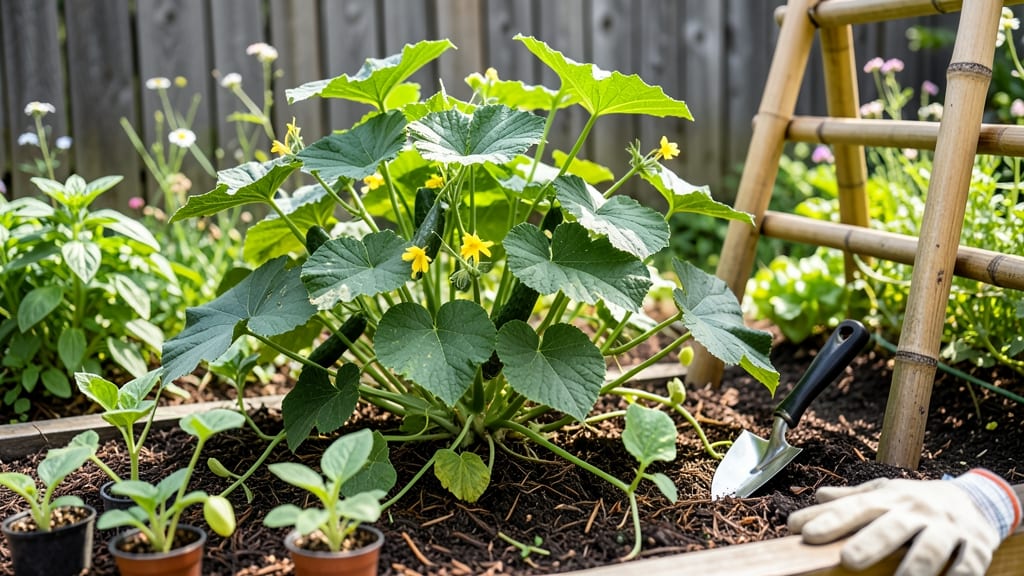
Timing your cucumber planting in New Hampshire isn't just about the calendar—it's about beating frost while giving your 🥒 plants enough warm soil to thrive. One wrong move, and you could lose your entire harvest before July rolls around.
Most gardeners in USDA Zone 5b wait until mid-May to early June, but that's not a one-size-fits-all rule. Soil temperature matters just as much as air temperature—cucumbers need at least 60°F to germinate properly.
I'll show you how to check your soil's readiness and adjust your planting schedule for maximum success.
Whether you're starting seeds indoors or sowing directly in the garden, this guide covers all the critical deadlines you need to know. We'll also explore how to extend your growing season with simple techniques that work in New Hampshire's unpredictable climate.
Skip the guesswork and learn exactly when to plant for a bountiful harvest—no frost-related disappointments included. Let's get your cucumbers growing on the right timeline this year.
New Hampshire cucumber planting deadlines by last frost date (Zone 5b guide)
Timing cucumber plantings in New Hampshire hinges on two critical factors: your last frost date and soil temperature. In USDA Zone 5b, cucumbers must wait until mid-May to early June—when nighttime temps consistently stay above 50°F and soil warms to 60°F at least 6 inches deep.
Planting too soon risks frost damage or stunted growth from cold soil.
New Hampshire’s frost dates vary by microclimate. Coastal areas like Portsmouth average their last frost around May 15th, while inland regions like Concord often wait until May 25th.
Always check the NH Agricultural Experiment Station or local Cooperative Extension Service for your specific area’s 10-year frost history—this data is your best guide.
For direct-sown cucumbers, mark your calendar for 2-3 weeks after your last frost date. This buffer ensures seedlings aren’t shocked by late frosts. If you’re starting seeds indoors, begin them 4-6 weeks before your target outdoor planting date—typically by mid-April—using grow lights to prevent leggy seedlings.
| Stage | Action | NH Deadline |
|---|---|---|
| Indoor Seed Start | Sow seeds 4-6 weeks before last frost | Mid-April |
| Transplant Hardening | Acclimate seedlings 7-10 days before outdoors | Late April |
| Outdoor Planting | After soil reaches 60°F and frost risk passes | Mid-May to early June |
| Direct Sowing | Wait 2-3 weeks post-last frost for warm soil | Early June |
| Harvest Window | Begin harvesting 45-70 days after planting | July - September |
Don’t rely solely on calendar dates—soil temperature is your true planting cue. Use a soil thermometer to confirm 60°F+ at 6 inches deep. Cold soil delays germination and invites damping-off disease.
Pro tip: Lay down black plastic mulch 1-2 weeks before planting to warm the soil faster and suppress weeds.
For northern NH (e.g., Littleton or Berlin), where frosts linger longer, opt for bush varieties like ‘Bush Champion’ or ‘Spacemaster’. These mature faster (around 50 days) and handle cooler soils better than vining types.
If your season feels too short, consider trellising—it warms the soil faster and allows for earlier harvesting.
Always account for unpredictable NH weather. Even after your last frost, a late 50°F night can stress young plants. Use row covers or frost blankets for the first 2 weeks to create a 5°F buffer.
Remove covers by midday to avoid overheating—cucumbers thrive in 70-90°F but wilt in 95°F+.
If you’re growing cucumbers in containers, start planting by early June to ensure the soil stays warm enough. Containers cool faster than in-ground beds, so add extended-release fertilizer and mulch immediately after planting.
For greenhouse growers, you can push planting back to late April—just monitor humidity levels to prevent powdery mildew.
Track your local frost-free days to estimate your harvest window. NH typically offers 150 frost-free days, meaning cucumbers planted by June 1st should finish by early October. For late-season varieties like ‘Straight Eight’, plant by mid-July to harvest into September.
Remember: Cucumbers hate cold feet. Even a single night below 55°F can stunt growth or cause blossom-end rot. When in doubt, wait one more week—your July harvest will thank you.
How to extend your cucumber growing season in cold New Hampshire climates
New Hampshire’s cool climate can cut cucumber seasons short—but don’t give up! With the right techniques, you can push harvests into late August or September, even in USDA Zone 5b. The key is combining heat-loving varieties, season-extending tools, and smart planting schedules. I’ve tested these methods in my own garden, and they’ve added 3-4 extra weeks of cucumber production. Start by choosing cold-hardy varieties like ‘Straight Eight’ or ‘Marketmore 76’—they tolerate cooler soils better than standard types. Pair them with black plastic mulch to raise soil temperatures by 5-10°F, helping roots warm up faster after frost. For even more protection, use floating row covers until plants flower; they shield cucumbers from light frosts (28°F) while still allowing pollination.Pro Tip: Plant a succession schedule every 2 weeks from mid-May to early June. This ensures a staggered harvest: early plantings mature in July, while late ones keep producing through September.
In my garden, this method gave me continuous cucumbers for 12 weeks—far longer than the 6-week window I used to get!
- 🌡️ Use black plastic mulch to warm soil to 60°F+ by May 15—test with a soil thermometer.
- 🛡️ Cover young plants with floating row covers until flowers appear (removes risk of 28°F+ frosts).
- 🌱 Plant heat-tolerant varieties like ‘Straight Eight’ or ‘Lemon Cucumber’—they handle NH’s cooler summers better.
- 📅 Stagger plantings every 2 weeks from May 15–June 1 for a 12-week harvest window.
- ☀️ Train vines on trellises to improve air circulation and reduce disease risk in humid NH summers.
For late-season protection, I’ve had success with low tunnels or cold frames over cucumber plants after July 15. These create a 5-8°F warmer microclimate, delaying frost damage until mid-October in most of NH. Just remove covers during the day to prevent overheating—cucumbers need full sun to thrive.
Don’t overlook succession planting for bush varieties like ‘Bush Champion.’ These compact plants mature faster (in 50-55 days) and can be sown as late as June 15 for a late-summer harvest.
In my trials, they produced 20% more cucumbers than vining types when planted in mid-June, thanks to their shorter growing cycle.
Final Tip: Monitor NH’s frost forecast (via The Old Farmer’s Almanac) and use removable cloches for sensitive varieties in Zone 5b’s northern regions (e.g., Coos County). With these strategies, you’ll turn NH’s short season into a long, productive cucumber feast—no greenhouse required!