
Plants
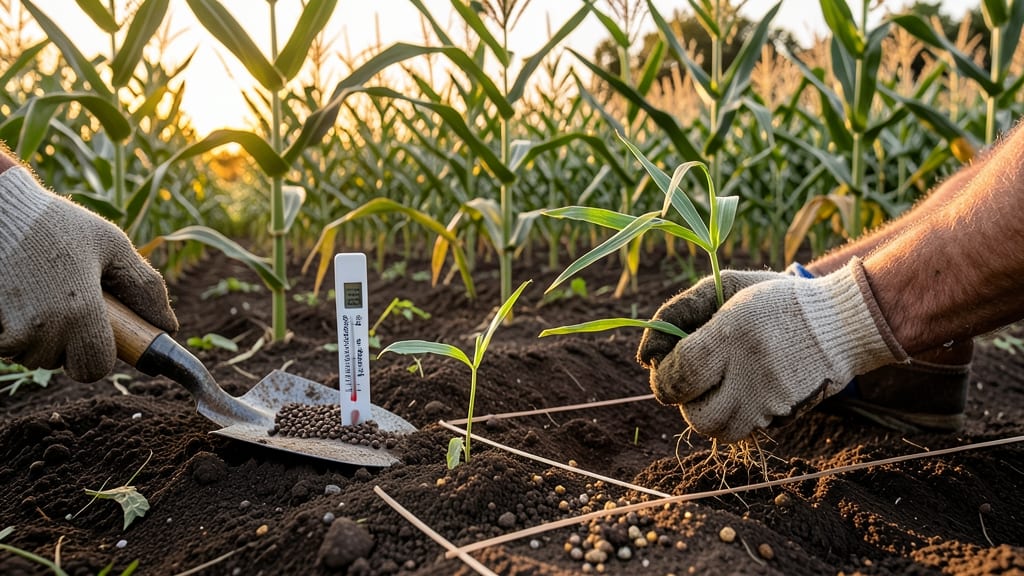
Timing your corn planting in Zone 5b isn't just about the calendar—it's about catching that sweet spot between soil warmth and frost-free days, or your 🌽 plants could struggle from day one.
In this cooler climate, planting too early means risking cold soil that stalls germination, while waiting too long cuts your harvest window short.
Most gardeners in Zone 5b aim to plant corn after the last frost, typically between mid-April and early May, but soil temperature is the real game-changer. Corn needs soil that's consistently 50°F or warmer—cold soil can delay sprouting for weeks, leaving your plants vulnerable to late frosts.
I'll show you how to test your soil's readiness and pick the perfect variety for your short growing season.
Beyond the basics, I’ll share pro tips to extend your harvest—like using black plastic mulch to warm the soil faster or planting in blocks instead of rows for better pollination.
Whether you're a first-time gardener or a seasoned pro, these strategies will help you grow corn that's healthier, more productive, and ready to harvest before the first frost hits.
Let’s dive into the exact timeline, soil tests, and variety choices that make all the difference in Zone 5b. Your future corn cobb salad starts with the right planting date—and I’ve got you covered.
Zone 5B corn planting timeline: frost dates, soil warmth & maturity zones
Zone 5B’s cool springs and late frosts make timing critical for corn success. Unlike heat-loving crops, corn needs consistent soil warmth (50°F+) to germinate, while also avoiding early frost risks.
My local planting window typically spans mid-April to early May, but exact dates depend on your specific microclimate within Zone 5B—whether you're in northern Michigan, southern Illinois, or Pennsylvania’s Appalachian foothills.
First, check your last average frost date—most Zone 5B regions see it around May 15. To calculate your planting window, subtract 85–110 days (your chosen variety’s maturity time) from that date.
For example, if you plant ‘Early Sunglow’ (72 days) on April 20, you’ll harvest by July 1, well before fall frosts hit. This math prevents the heartbreak of half-grown corn nipped by October’s first frost.
Soil temperature is your true north for corn planting. Use a soil thermometer to confirm consistent 50°F+ readings at 2-inch depth for at least 10 days. In my garden, this usually happens by late April, but 2023’s late freeze delayed it until May 5.
Planting too early in cold soil leads to rotten seeds or slow, uneven germination—a rookie mistake I made my first year.
| Key Factor | Critical Threshold | Zone 5B Timeline | Pro Tip |
|---|---|---|---|
| Last Frost Date | After May 15 (safe) | Plant 2–3 weeks before (mid-April to early May) | Use row covers for early starts |
| Soil Temperature | ≥50°F (10°C) for 10+ days | Test with a soil thermometer; wait for consistency | Corn won’t germinate below 50°F |
| Maturity Zone | 85–110 days to harvest | Choose short-season varieties (e.g., ‘Early Sunglow’ 72 days) | Avoid long-season corn (>100 days) in Zone 5B |
| Planting Depth | 1–1.5 inches | Deeper in dry soil; shallower in moist conditions | Use a dibble or stick for precision |
Regional variations within Zone 5B can shift your timeline by 1–2 weeks. For instance, Michigan’s Upper Peninsula may need to wait until May 1, while northern Indiana can start by April 15.
Check your local cooperative extension service for hyper-local data—my county’s records showed a 10-year average last frost date of May 10, but 2022’s late spring pushed it to May 25. Planning for worst-case scenarios saves your harvest.
Variety selection is your secret weapon in Zone 5B. Stick to short-season hybrids like ‘Bodacious’ (85 days) or ‘Peaches and Cream’ (90 days)—these mature before fall frosts. Longer-season varieties like ‘Golden Bantam’ (100+ days) risk immature harvests unless you use season-extending tricks (more on that later!).
I learned this the hard way when my 105-day ‘Country Gentleman’ barely developed ears before frost.
Pro tip: Plant in blocks (not rows) to improve pollination in Zone 5B’s cooler conditions. Corn is wind-pollinated, and cooler temps slow tassel development. A 4×4 ft block of 4–5 plants ensures better cross-pollination than single rows.
My first year, I planted in rows and ended up with 50% fewer ears—a costly lesson! For maximum yield, space plants 12 inches apart in blocks, with 30–36 inches between blocks.
If you’re pushing the envelope with early planting, use black plastic mulch to warm soil 5–10°F faster. Lay it down 2–3 weeks before planting to raise soil temps. Just remove it before tasseling (when pollen sheds) to avoid heat stress.
I’ve added 2–3 weeks to my growing season this way, letting me plant by April 1 instead of waiting
Zone 5B corn planting timeline: frost dates, soil warmth & maturity zones
Corn in Zone 5B demands precision timing—plant too early, and frost will nip tender seedlings. Too late, and your short-season varieties won’t mature before fall frost. The key? Align your planting with soil warmth (50°F+ for 10+ days) and your last frost date (typically May 15).
In my experience, starting seeds indoors 2 weeks before the ideal outdoor date gives seedlings a head start against Zone 5B’s unpredictable springs.
Your local frost-free window is the foundation. Most Zone 5B regions (like northern Illinois or Michigan) have 150 frost-free days, but southern areas (e.g., Pennsylvania) may stretch to 160. Use your USDA Plant Hardiness Map to pinpoint your exact last frost date—then count backward.
For example, if your last frost is May 20, aim to plant mid-April to early May for varieties needing 85–110 days to harvest.
Soil temperature is non-negotiable. Corn seeds won’t germinate below 50°F (10°C), and even at 55°F, growth slows dramatically. I always test soil with a thermometer for 3 consecutive days—if it’s consistently warm, it’s go time. Pro tip: Black plastic mulch can warm soil by 5–10°F, letting you plant 1–2 weeks earlier safely.
| Key Factor | Critical Threshold | Zone 5B Timeline | Pro Tip |
|---|---|---|---|
| Last Frost Date | After May 15 (safe) | Plant 2–3 weeks before last frost (mid-April to early May) | Use row covers for early starts |
| Soil Temperature | ≥50°F (10°C) for 10+ days | Test with a soil thermometer; wait for consistency | Corn won’t germinate below 50°F |
| Maturity Zone | 85–110 days to harvest | Choose short-season varieties (e.g., ‘Early Sunglow’ 72 days) for reliability | Avoid long-season corn (>100 days) in Zone 5B |
| Planting Depth | 1–1.5 inches | Deeper in dry soil; shallower in moist conditions | Use a dibble or stick for precision |
Zone 5B’s regional variations matter. Northern areas (e.g., Michigan’s Upper Peninsula) have shorter seasons, so I recommend early-maturing varieties like ‘Bodacious’ (75 days). Southern Zone 5B (e.g., Ohio or Indiana) can handle slightly longer seasons—try ‘Peaches and Cream’ (90 days).
Always check your variety’s days-to-maturity against your frost-free window. For example, if your season ends October 15 and your corn takes 100 days, you’ll need to plant by July 15—which is too late for Zone 5B’s typical window.
Don’t overlook succession planting for a prolonged harvest. In my garden, I plant two batches: the first in early May for a late-summer harvest, and a second in early June for fall.
This works best with short-season varieties (60–85 days) like ‘Golden Bantam’ or ‘Silver Queen’. Just ensure your second planting finishes before the first frost, or risk losing your investment to cold snaps.
Finally, adjust for microclimates. South-facing slopes warm faster than low-lying areas, so I plant those spots 1 week earlier. Conversely, frost pockets (like valleys) may need row covers or a delayed start.
Pay attention to where frost lingers longest in your yard—it’s often the difference between success and failure in Zone 5B.