
Plants
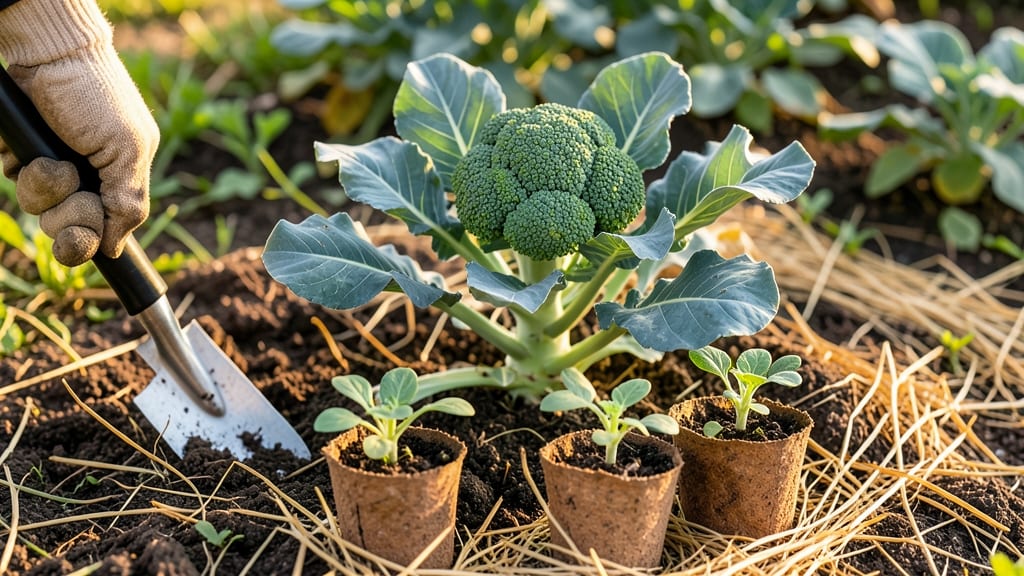
Planting broccoli 🥦 in Northern California’s 8a-9b zones isn’t just about timing—it’s about outsmarting the region’s wild swings from coastal fog to Central Valley heat. Get the schedule wrong, and you’ll watch your crop bolt in summer or freeze before forming heads.
The secret? Understanding your microclimate’s last frost dates—whether you’re in the Bay Area’s chilly coastal belt or Sacramento’s warmer valleys—and planting 4-6 weeks before spring’s final frost or 100-120 days before fall’s first freeze.
Most gardeners in Northern California focus on the classic February-March spring window, but the real magic happens with fall planting in August-September—a strategy that lets you harvest through October’s crisp air.
The key is variety selection: heat-tolerant types like ‘De Cicco’ for summer’s lingering warmth, or cold-hardy ‘Waltham 29’ for early spring starts. I’ll show you how to map your planting dates to your exact location, using frost-free day calculations that actually work for Zone 8a-9b.
What if your neighbor’s broccoli thrives while yours struggles? The answer lies in soil prep and spacing—broccoli needs 18-24 inches between plants to avoid disease and crowding.
I’ll break down the 3-step soil prep that keeps roots happy, plus how succession planting can give you a continuous harvest from May through November. Ready to stop guessing and start growing?
Let’s dive into the exact planting calendar for your microclimate, plus the one trick that saves fall crops from early frost. Your 🥦 harvest is closer than you think.
Northern California broccoli planting calendar by microclimate Zone
Northern California’s diverse microclimates mean your broccoli planting dates should vary dramatically between regions. Coastal areas like the San Francisco Bay Area (USDA Zone 9b) enjoy milder winters, while inland Central Valley (Zone 9a) and Sierra foothills (Zone 8a) face earlier frosts.
Understanding these differences is key to avoiding frost damage or bolting from heat.
For spring planting, aim to transplant 4-6 weeks before your area’s average last frost date. In the Bay Area, that’s typically February to early March, while Sacramento gardeners should wait until mid-March.
Fall crops need 100-120 days to mature before the first frost—plant August to early September in coastal zones and July to mid-August inland.
Key microclimate factors to consider: coastal fog delays frost, inland valleys heat up faster, and high-elevation areas (like Lake Tahoe’s foothills) have earlier frost dates. Always check your local USDA zone and historical frost data for precision.
If you’re in Zone 9b (like San Francisco or Santa Cruz), you can even try winter planting for early spring harvests—just use row covers to protect from light frosts. For inland areas, succession planting every 2-3 weeks ensures continuous harvests through summer’s end.
Pro tip: Use NOAA’s frost prediction maps or your local Cooperative Extension office for real-time adjustments. Even a 5-day delay can mean the difference between a thriving crop and bolted broccoli.
For container gardening, coastal gardeners can plant 1-2 weeks earlier since pots warm up faster in the sun. Just ensure containers have drainage holes to prevent root rot in Northern California’s cool, damp winters.
Remember: Broccoli hates heat—temperatures above 80°F will cause it to bolt. If summer arrives early, opt for shade cloth or prioritize fall planting.
Start with fast-maturing varieties (like 'De Cicco') if your season is short, or 'Waltham 29' for larger heads in longer growing windows. Always harden off seedlings for 7-10 days before transplanting to avoid shock.
Finally, mark your planting dates on a garden calendar with reminders for fertilizing (every 4-6 weeks) and harvesting (when heads reach 4-8 inches). With this precision, you’ll enjoy homegrown broccoli from May through November!
How to adjust broccoli planting dates for your local weather patterns
Northern California’s weather is famously unpredictable—one week can bring unseasonable heat to the Central Valley while coastal areas shiver in damp fog. To avoid bolting broccoli 🥦 or frost-bitten heads, I rely on three key tools: historical frost data, real-time soil temperatures, and NOAA forecasts.
For example, if your area’s last frost typically hits December 15 (like San Francisco), you’ll need to plant fall broccoli by late August to harvest before frost. But if you’re in Sacramento’s Zone 9b, where frost arrives later, you’ve got until early September.
The USDA Plant Hardiness Zone Map gives a baseline, but your local microclimate is what truly matters. I once planted broccoli in Berkeley’s coastal fog belt on the recommended February 15 date—only to watch it struggle in chilly, damp soil.
A quick check of the NOAA’s historical frost data showed that my actual last frost date was March 1, so I adjusted my planting to late February for better success.
Here’s my 3-step method to fine-tune your planting dates: First, check your local frost dates (use the Almanac’s Frost Calculator for your ZIP code). Second, adjust for soil temperature—broccoli seeds need 40°F+ soil to sprout, so wait until late February for spring planting if your soil runs cold.
Finally, monitor weekly forecasts for heat waves—if temperatures hit 85°F+, your broccoli will bolt faster than expected.
⚠️ Watch Out for These Timing Traps
- Planting too early: Seeds rot in cold, wet soil (common in coastal zones).
- Ignoring heat spikes: Broccoli bolts in 70°F+ soil—check 7-day forecasts before planting.
- Skipping fall prep: August planting is critical for fall harvests, but September starts risk frost before maturity.
Pro Tip: Use row covers to extend your fall harvest window by 2-3 weeks.
For coastal gardeners (like those in San Francisco or Santa Cruz), I recommend planting spring broccoli in late February and fall broccoli by August 15. Inland areas (e.g., Sacramento or Stockton) can push spring planting to March 1 and fall planting to September 1.
The Sierra foothills are trickier—plant spring broccoli in March and fall broccoli by August 1 to avoid early frosts.
Don’t forget to test your soil before planting! Broccoli thrives in 6.0-7.0 pH soil. If your soil is too acidic (common in redwood-rich areas), add lime 2-3 weeks before planting. I also mulch heavily with straw to retain moisture and regulate soil temperature—critical in Northern California’s dry summers.
By combining local frost data, soil temperature checks, and weather forecasts, you’ll turn your broccoli planting from a gamble into a guaranteed harvest. Start with your ZIP code’s frost dates, then tweak based on your garden’s unique conditions. Your 🥦 crop will thank you!