
Plants
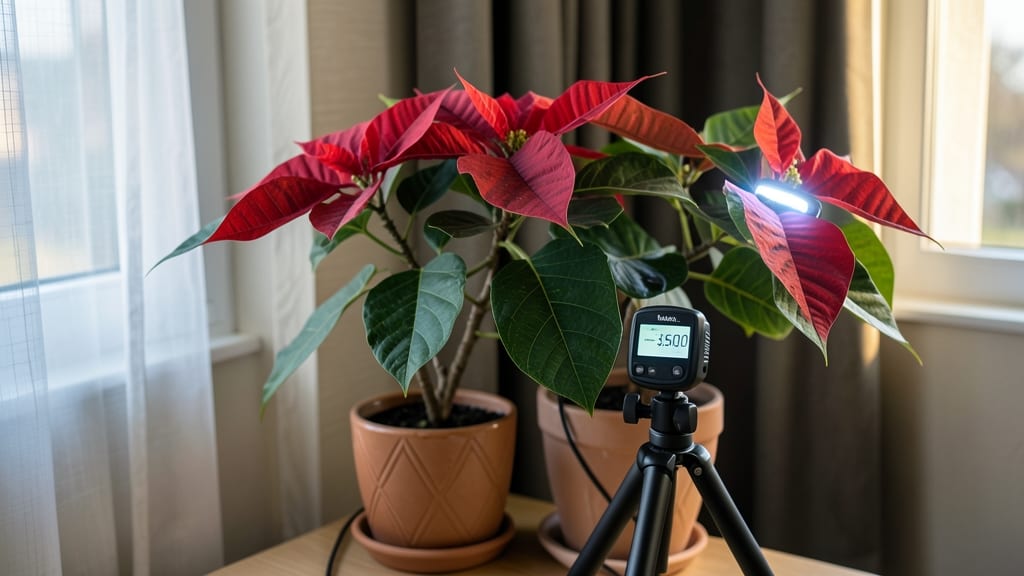
Want to know how much light does a poinsettia plant need to stay vibrant all season? The secret isn’t just water or soil—it’s all about finding the right balance. Too much direct sun, and those gorgeous red bracts fade to crispy brown.
Too little, and your plant stretches out like a sleepy cat in winter. Finding the right balance is easier than you think, and I’ll show you exactly how to set it up for success.
Most people assume poinsettias thrive in bright spots, but bright indirect light is actually the magic formula. Think of it like a cozy reading nook—close enough to the window to feel the warmth, but not in the spotlight where the pages would scorch.
This delicate balance keeps your plant’s leaves lush and its bracts popping with color, right up until the New Year.
If your poinsettia is already looking a little sad, don’t worry—we’ll cover how to spot the signs of over- or under-lighting and fix them fast.
Whether you’re dealing with a sunny south-facing window or a dim corner office, I’ve got practical tips to keep your poinsettia 🎄 thriving all season long. Let’s get those bracts glowing!
Ready to transform your plant-care game? You’ll learn which windows work best, how to supplement with artificial light if needed, and even how to adjust for the shorter winter days. By the end, your poinsettia will be the star of the room—no guesswork required.

Ideal light requirements for poinsettia blooms: bright indirect sun explained
Poinsettias thrive in bright indirect sunlight, mimicking their native understory habitat. Too much direct sun causes leaf scorch, while too little leads to pale bracts and weak stems. The sweet spot is 6-8 hours of filtered light daily, achieved through east or west-facing windows with sheer curtains.
Think of it like morning coffee light—gentle but bright enough to energize your plant without burning it. South-facing windows work but require curtains or a sheer screen to diffuse harsh afternoon rays. North-facing windows may need supplemental grow lights to compensate for lower light intensity.
During winter months, when natural light dims, extend exposure to 8-10 hours using LED grow lights (12-15 watts per square foot). This mimics longer daylight hours and prevents leggy growth or color fading. Place lights 6-12 inches above the plant for even coverage.
The science behind vibrant bracts lies in chlorophyll production and photoperiodism. Bright indirect light fuels photosynthesis, while consistent light duration triggers the 12-hour darkness period needed for color development. Without proper light, your poinsettia’s red bracts may turn greenish-yellow instead of their signature festive hues.
Pro tip: Rotate your poinsettia quarter-turn weekly to ensure even light exposure. This prevents lopsided growth toward the light source and keeps the plant compact and symmetrical. A well-lit poinsettia isn’t just healthier—it’s more likely to rebloom the following year with proper care.
🌱 Poinsettia Light Requirements Summary
| Requirement | Specification |
|---|---|
| Daily Light Duration | 6-8 hours (8-10 in winter) |
| Light Type | Bright indirect (never direct) |
| Best Window Placement | East or west-facing, 2-3 ft away |
| Supplemental Light | LED grow lights (12-15W/sq ft) |
| Distance from Light Source | 6-12 inches for grow lights |
Seasonal adjustments are crucial. In summer’s intense sunlight, move your poinsettia further from windows or use reflective surfaces (like mirrors) to bounce light gently. During short winter days, supplement with 14-16 hours of light total (natural + artificial) to maintain vigor.
Ever notice how poinsettias in stores have perfectly vibrant bracts? That’s not just good genetics—it’s controlled lighting. Recreate this at home by placing your plant near a south-facing window with a sheer curtain or under full-spectrum LED bulbs (6500K color temperature).
Avoid incandescent bulbs, which emit too much heat and can damage leaves.
For apartment dwellers with limited natural light, invest in a small LED grow light (like the Soltana 120 or Mars Hydro TS 3000). These provide the red and blue spectrum poinsettias need for photosynthesis and flowering. Run them for 12-14 hours daily to simulate long daylight hours.
Remember: Light quality matters more than quantity. A poinsettia in dim but consistent light will fare better than one getting harsh afternoon sun for only 2 hours. The goal is to mimic natural understory conditions—bright but diffused, like dappled sunlight on a forest floor.
Your poinsettia’s bract color intensity is directly tied to light exposure. Red bracts develop best with 12+ hours of darkness daily (after proper light exposure). Without adequate light, bracts may stay green or turn yellowish, ruining that holiday cheer.
Think of light as the fuel for color—skip it, and you’ll miss out on those show-stopping hues.
Ideal light requirements for poinsettia blooms: bright indirect sun explained
Poinsettias thrive in bright indirect light, mimicking their natural understory habitat. Too much direct sun causes leaf scorch, while too little leads to pale bracts and leggy growth. Aim for 6-8 hours of filtered sunlight daily—think east or west-facing windows with sheer curtains to diffuse harsh rays.
During winter months, when natural light dims, supplement with grow lights to maintain intensity. Position lights 12-18 inches above the plant for 12-14 hours/day to prevent stretching. The key is balancing light intensity and duration to trigger vibrant bract coloration.
| Light Requirement | Specification | Seasonal Adjustment |
|---|---|---|
| Daily Light Hours | 6-8 hours | Increase to 14 hours in winter |
| Light Type | Bright indirect | Use sheer curtains in summer |
| Window Placement | East or west-facing | Rotate pot weekly for even growth |
| Artificial Light | LED grow lights | 12-18" distance, 12-14 hrs/day |
Poinsettias rely on photosynthesis to produce chlorophyll, which fuels their iconic red bracts. When light is insufficient, chlorophyll dominates, suppressing the anthocyanins responsible for those festive colors. For optimal blooms, ensure your plant receives consistent light exposure without harsh afternoon sun.
In summer months, poinsettias enter dormancy. Reduce light exposure to 4-6 hours/day and move them to a shadier spot. This mimics their natural cycle and prevents heat stress. Reintroduce brighter light in early fall to encourage new growth and vibrant fall coloration.
Pro tip: Use a light meter (or your phone's light sensor) to measure 1,000-2,000 foot-candles of light. If readings drop below 1,000 foot-candles, supplement with a full-spectrum LED bulb rated for plants. This ensures your poinsettia gets the blue and red light spectrum needed for healthy foliage and blooms.
Monitor your poinsettia's growth patterns to fine-tune light exposure. If stems stretch excessively toward the light source, it's a sign of light hunger. Conversely, if leaves develop yellow or brown spots, move it away from direct sunlight immediately. Small adjustments keep your plant thriving all season long. 🌿