
Plants
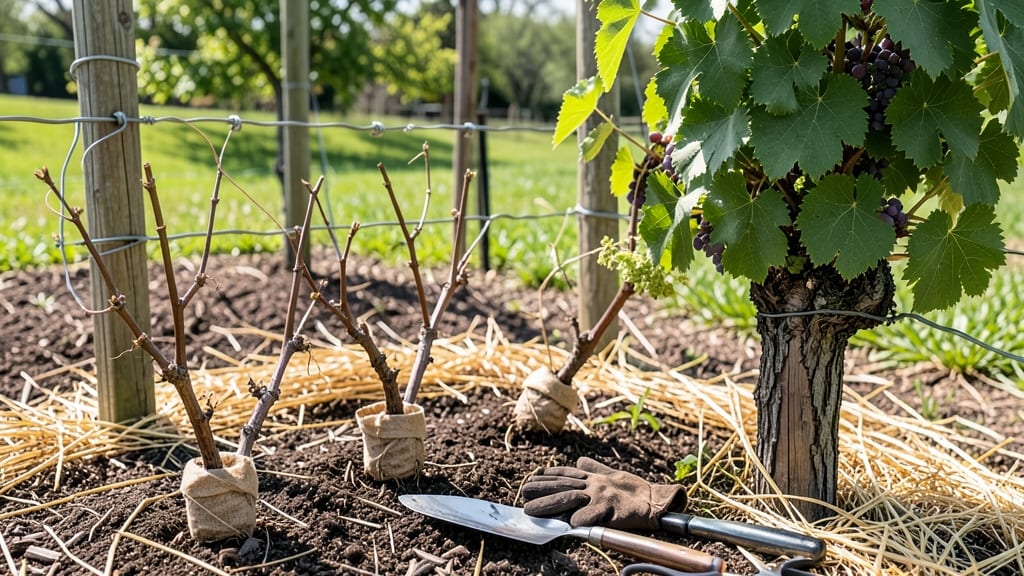
If you're dreaming of luscious 🍇 grapes ripening in your Michigan backyard, timing your planting is the game-changer between a thriving vineyard and a lost investment. Michigan's 5a-6b zones demand precision—planting too early risks frost damage, while waiting too long stunts root growth before winter.
Most Michigan gardeners plant bare-root grapes in early spring (April-May) when soil temperatures hit 60°F for two weeks, but containerized vines can go in after last frost. The key? Chill hours—cold-hardy varieties like Concord need 1,000+ hours below 45°F, while Cabernet Franc thrives with 800-1,000 hours.
I'll break down the exact windows for your region, from Northern Michigan's later frost dates to Southern Michigan's earlier planting opportunities. Whether you're a first-time grower or a seasoned vineyard enthusiast, these insights will help you avoid common pitfalls and maximize your harvest.
Ready to turn your grape dreams into reality? Let's dive into the step-by-step timeline that separates successful planting from disappointment.
Michigan grape planting dates by chill hour requirements
Michigan’s USDA zones 5a-6b demand careful selection of grape varieties based on chill hours—the number of hours below 45°F needed for dormancy. Concord grapes thrive in Northern Michigan with 1,000-1,200 chill hours, while Cabernet Franc suits Southern Michigan’s 800-1,000 chill hours.
Choosing the wrong variety risks poor fruit set or winter dieback.
For Northern Michigan (zones 5a-5b), prioritize cold-hardy varieties like Marquette or Frontenac, which tolerate 1,500+ chill hours. Southern Michigan (zones 6a-6b) can handle Cabernet Sauvignon or Chardonnay with 800-1,000 chill hours, but expect lower yields if chill hours dip below 700.
Timing your planting to align with chill hour accumulation is critical. Plant bare-root vines in early spring (March–April) when soil temperatures reach 50°F but before buds break. Containerized vines can wait until after the last frost (mid-May), but delay risks stunted growth.
Here’s how chill hours dictate your planting window:
🍇 Low-chill varieties (600-800 hours): Plant in Southern Michigan (zones 6a-6b) by April 30 to ensure sufficient winter dormancy.
🍇 Medium-chill varieties (800-1,200 hours): Ideal for Central Michigan (zone 6a)—plant by April 15 to avoid heat stress before dormancy.
🍇 High-chill varieties (1,200+ hours): Best for Northern Michigan (zones 5a-5b)—plant by March 31 to maximize root establishment before summer.
| Variety | Chill Hours | Best USDA Zone | Planting Window | Notes |
|---|---|---|---|---|
| Concord | 1,000-1,200 | 5a-6a | March 15–April 15 | Cold-hardy, high yield |
| Cabernet Franc | 800-1,000 | 6a-6b | April 1–May 1 | Moderate chill needs |
| Marquette | 1,200-1,500 | 5a-5b | March 1–March 31 | Disease-resistant |
| Chardonnay | 700-900 | 6a-6b | April 15–May 1 | Needs winter protection |
| Frontenac | 1,500+ | 5a-5b | March 1–April 1 | Best for coldest zones |
Use a soil thermometer to confirm 50°F soil temperatures before planting—cold soil slows root growth. In Northern Michigan, aim for March planting to give vines time to establish before summer heat. Southern Michigan can extend planting to mid-April without risking frost damage.
Pro tip: Mulch heavily after planting to retain soil warmth and protect
Best months to plant grapes in Michigan: bareroot vs. potted vines
Michigan gardeners have two prime windows to plant grapes—spring (March–May) and fall (September–October)—but the best choice depends on whether you’re using bare-root vines or containerized plants. Each method has unique timing rules to avoid transplant shock and maximize root establishment before winter or summer heat.
For bare-root grapes, early spring (March–April) is ideal because dormant vines establish roots before buds break. This gives them a head start before Michigan’s unpredictable spring rains or late frosts.
If you miss spring, fall planting (late September–early October) works too, but only if your vines have 6+ weeks to root before hard frost hits.
Containerized grapes, however, are more flexible. You can plant them after the last frost date (typically mid-April to early May in most of Michigan) to avoid shocking tender roots. This method is perfect for gardeners in USDA zones 5a–6a, where early springs can still bring frost surprises.
If you’re planting in Northern Michigan (zones 5a–5b), stick to spring planting—fall is too risky due to early frosts. Southern Michigan (zones 6a–6b) can attempt fall planting, but monitor local frost forecasts closely. Use a soil thermometer to confirm temps are stable above 50°F before planting.
One common mistake? Planting grapes too deep. The crown (where stems meet roots) should sit 1–2 inches above soil level to prevent rot. Mulch heavily with straw or wood chips (3–4 inches) to insulate roots in winter and retain moisture in summer.
This is especially critical in Michigan’s dry summers or freeze-thaw cycles.
Remember: Grapes are a long-term investment. A vine planted in spring will take 2–3 years to bear fruit, but proper timing now means bigger harvests and healthier vines for decades.
Choose your planting window wisely, and your Michigan grapevine will reward you with juicy, homegrown bounty—not just in your first year, but for years to come. 🍇