
Plants
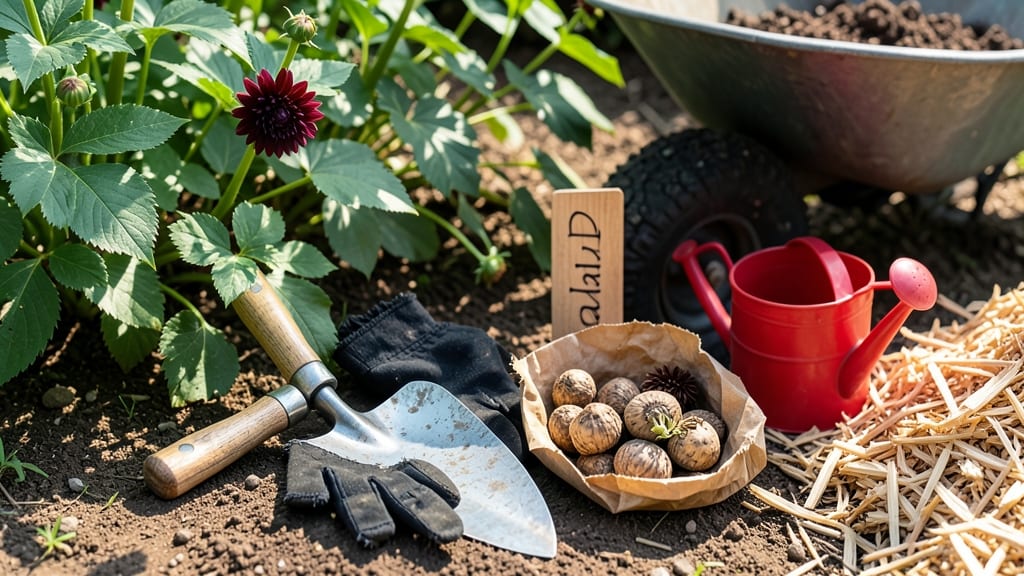
Planting dahlia bulbs at the wrong time in Oregon could mean waiting months for those stunning 🌼 blooms—or worse, losing them entirely to a surprise frost.
The key to success lies in knowing when the soil warms and the last frost has truly passed, which varies dramatically between Portland’s damp springs and the high desert’s earlier thaw.
Most Oregon gardeners in USDA Zones 7b-9a should wait until mid-April to early June, but that window shifts depending on your microclimate.
Coastal areas like Astoria may need to wait until late May, while inland spots like Bend can plant as early as late March if the ground isn’t soggy. The goal? Get those tubers in the ground when soil temperatures hit 60°F—any earlier, and cold soil can stunt growth.
I’ve learned the hard way that rushing dahlia planting often backfires—last year, my early-April attempt in the Willamette Valley resulted in yellowing leaves when a late frost hit.
The solution? A simple soil thermometer and checking your local frost-free date (Portland’s average is April 15, but it can vary by weeks).
In this guide, I’ll break down the exact planting timeline for your Oregon region, plus pro tips to harden off tubers and protect your dahlias from unpredictable spring weather.
By the end, you’ll know precisely when to plant for maximum blooms—and how to extend your dahlias’ season well into fall.
Oregon’s frost-free timeline: exact weeks to plant dahlia bulbs by county
Oregon’s Zone 6-7 climate means dahlia tubers need precise timing to thrive. Planting too early risks frost damage, while late planting cuts your bloom season short. The key is waiting for consistent soil temperatures above 60°F and frost-free nights.
In most of Oregon, this window opens between mid-April and early June, but exact dates vary wildly by region.
For example, Medford (Zone 8a) can plant as early as March 15, while Bend (Zone 6b) must wait until May 15.
Coastal areas like Astoria (Zone 8b) face later planting due to cooler maritime air, while high desert regions (Zone 7a) like Burns can start earlier thanks to rapid soil warming.
🌱 Pro Tip: Use a soil thermometer to confirm 60°F+ soil temps—this is more reliable than guessing by calendar dates. Oregon’s Willamette Valley often hits this mark by mid-April, but eastern Oregon may need to wait until late May.
| Region | USDA Zone | Last Frost Date | Ideal Planting Window | Soil Temp Check |
|---|---|---|---|---|
| Portland | 7b-8a | April 15 | April 20 - May 10 | 60°F+ (usually by April 25) |
| Eugene | 7b-8a | April 10 | April 15 - May 5 | 60°F+ (usually by April 20) |
| Bend | 6b-7a | May 15 | May 20 - June 10 | 60°F+ (usually by May 25) |
| Medford | 8a-8b | March 15 | March 20 - April 15 | 60°F+ (usually by March 25) |
| Astoria (Coastal) | 8b-9a | April 20 | May 1 - May 20 | 60°F+ (usually by May 5) |
If you’re in Zone 9a (like Brookings), you can push planting to late March—but beware of coastal fog, which can delay warming. For Zone 6b areas, wait until after May 15 to avoid late spring frosts that can blacken tender shoots overnight.
🌿 Microclimate Matters: Urban heat islands (like Portland’s downtown) may warm 1-2 weeks earlier than rural areas. Conversely, valley bottoms (e.g., Willamette Valley) can hold frost longer than south-facing slopes. Use your local CoCoRaHS weather station data for precise local trends.
For late bloomers, consider chitting tubers indoors 4-6 weeks before your target planting date. This jumpstarts growth and gives you a 2-3 week head start on the season. Just be ready to harden off plants before transplanting to avoid shock.
Remember: Dahlias hate cold soil. If you plant too early, roots won’t establish, and tubers may rot. The 10-day rule is my go-to—wait until 10 consecutive frost-free days have passed in your area before planting.
🌸 First-Frost Alert: Oregon’s first frost typically hits between October 1-15, but high desert areas can see frost as early as September 15. Plan to dig and store tubers before temperatures dip below 50°F at night.
How to prepare dahlia tubers for Oregon’s unpredictable spring weather
Oregon’s spring weather is famously fickle—one day warm, the next with a surprise frost. To give your dahlia tubers the best start, you’ll need to prep them indoors before the final frost date. This extra care ensures strong roots before they face Oregon’s cool, damp soil.
Start by chitting tubers (encouraging early sprouts) in late February or March, depending on your USDA Zone. Place tubers in a shallow tray with moist potting mix, eyes (growth points) facing up.
Keep them in a bright, warm spot (around 60-65°F) and mist lightly to prevent drying.
Once sprouts reach 2-3 inches tall, it’s time to harden them off. Move the tray outdoors for 3-5 hours daily, gradually increasing exposure to sun and wind. This mimics Oregon’s transitioning spring and prevents shock when planted.
Before planting, test your soil temperature—dahlias won’t thrive in cold, soggy soil. Use a soil thermometer to confirm it’s at least 60°F. In cooler microclimates (like coastal Oregon), wait until mid-May to avoid stunted growth.
Oregon gardeners often make two critical mistakes: planting tubers too deep (burying eyes) or ignoring late frost warnings. To avoid this, use row covers or a cloche for the first 2 weeks after planting.
This protects young shoots from unexpected late frosts, which are common in Zone 6-7.
Once planted, mulch heavily with straw or leaves to retain warmth and moisture. This is especially important in Oregon’s rainy springs, where tubers can rot if overwatered. Water deeply but infrequently—dahlias hate soggy roots—and fertilize lightly with a balanced bloom booster once shoots emerge.