
Plants
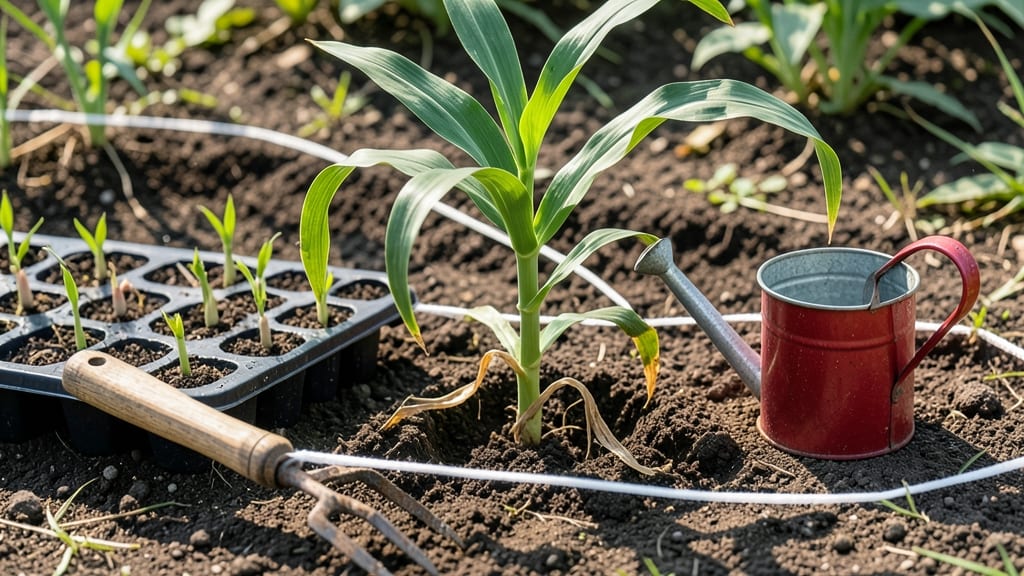
Planting corn in Middle Tennessee isn't just about the calendar—it's about catching that sweet spot between frost risk and soil warmth that turns 🌽 seeds into towering, productive stalks.
Get the timing wrong, and you might end up with stunted plants or worse, a total loss to late frosts that love to sneak in during Zone 7a's unpredictable springs.
I’ve learned the hard way that waiting for the last frost date (usually around March 15) isn’t enough—your soil needs to hit at least 60°F for those seeds to sprout reliably.
That’s why mid-April to late May is your golden window, but even then, early varieties can start going in the ground as soon as the soil warms up.
What makes this region tricky is the mix of urban heat islands in Nashville and cooler plateaus nearby. Some years, you might need to adjust your planting by a week or two, depending on whether you’re dealing with a late spring or an early heatwave.
The key is watching both the weather forecast and your soil thermometer.
In this guide, I’ll walk you through exactly how to time your corn planting for maximum yields, including soil prep tips, variety choices, and backup plans for those "just one more frost" moments that Middle Tennessee gardeners dread. Let’s get those kernels popping!
Middle Tennessee corn planting dates by soil temperature & frost risk
Corn thrives in Middle Tennessee’s USDA Zones 6b-7a when planted after the last frost date—typically mid-April to late May. However, soil temperature matters more than calendar dates. Corn seeds need soil temps of 50°F+ for 2+ weeks to germinate reliably, with ideal planting temps at 60°F+ for faster growth.
In Zone 7a, where summers are shorter, early-maturing varieties (85-90 days) are critical to avoid early frost risks.
Use a soil thermometer to check depth (2 inches). If temps dip below 50°F at night, cover seeds with black plastic mulch to warm the soil faster. Nashville’s average last frost date is March 15, but mountain regions (e.g., Cumberland Plateau) can experience frost 2-3 weeks later.
Always wait 2 weeks after the last frost to ensure safety for tender seedlings.
For late-summer harvests, consider a second planting in early June using fast-maturing varieties like ‘Early Sunglow’ (75 days). This extends your harvest window into early October before the first frost (average November 15). However, June plantings require drought-resistant varieties like ‘Silver Queen’ to handle Middle Tennessee’s dry summers.
🌽 Middle Tennessee Corn Planting Summary
| Planting Window | Soil Temp Requirement | Variety Type | Harvest Window |
|---|---|---|---|
| Mid-April to late May | 50°F+ (2+ weeks) | Early (85-90 days) | Late July to early Sept |
| Early June (backup) | 60°F+ (immediate) | Fast (75-80 days) | Early Oct (before frost) |
| Late May (standard) | 60°F+ (consistent) | Mid (90-100 days) | Mid-Sept to Oct |
💡 Pro Tip: Use a planting calendar like the Tennessee State Extension’s frost maps for hyper-local adjustments.
Heat units (growing degree days) are another key factor in Middle Tennessee. Zone 7a typically accumulates 2,800–3,200 heat units by late October.
Choose varieties that match your remaining growing season—for example, ‘Peaches & Cream’ (100 days) needs 2,500+ heat units, while ‘Bodacious’ (85 days) thrives with 2,000+ units. Check your local heat unit calculator (e.g., Purdue University’s tool) to refine timing.
If you’re starting seeds indoors (not recommended for corn due to transplant shock), begin 4-6 weeks before the last frost in biodegradable pots to avoid root disturbance. Harden off seedlings for 7-10 days before transplanting into warm soil. Direct sowing is preferred—corn’s deep roots establish better when planted outdoors.
For urban gardeners in Nashville, microclimates can shift planting by 1-2 weeks. South-facing walls or paved areas may warm soil 5-10°F faster than shaded spots.
Use row covers for early plantings to accelerate soil warming and protect from late frosts. Remove covers once soil temps exceed 60°F to prevent overheating.
Monitor weather forecasts for unpredictable late frosts, especially in higher elevations like Chattanooga’s suburbs. If frost threatens after germination, cover seedlings with blankets or cardboard until temps rise. Avoid plastic directly on plants—it traps too much heat and can scorch tender leaves.
Finally, test your soil pH (ideal: 6.0–6.8) and amend with compost or lime if needed. Corn is a heavy feeder, so incorporate phosphorus-rich fertilizer (e.g., 5-10-10) at planting. In sandy soils (common in Middle Tennessee), add organic matter to retain moisture and nutrients.
With the right timing and prep, your Middle Tennessee corn can reach heights of 6-12 feet and yield 2-3 ears per stalk—worth the effort for fresh, sweet kernels straight from your garden! 🌽
How to adjust corn planting for Middle Tennessee’s microclimates & weather patterns
Middle Tennessee’s varied geography—from Nashville’s urban heat islands to the cooler Cumberland Plateau—means planting dates can shift by weeks. River valleys like the Cumberland often warm faster than plateau regions, while concrete-heavy urban areas can trap heat, accelerating growth. Adjust your planting timeline based on your specific location to avoid late frosts or summer drought stress.| Microclimate | Adjustment | Best Varieties |
|---|---|---|
| Urban Heat Islands (Nashville) | Plant 1-2 weeks earlier (early April) for faster soil warming. | ‘Peaches & Cream’ (85 days) |
| Plateau Regions (Cumberland) | Wait until mid-May to avoid late frosts (avg. last frost: May 10). | ‘Silver Queen’ (110 days, drought-tolerant) |
| River Valleys (Cumberland River) | Plant late April—warmer microclimate extends growing season. | ‘Bodacious’ (90 days, sweet corn) |
🌽
Monitor local heat units (growing degree days) via the Middle Tennessee Ag Extension—aim for 2,500–3,000 heat units for full maturity. In Zone 7a, plant early-maturing varieties (85–90 days) by mid-April to ensure harvest before the first frost (avg. Nov 15).
For succession planting, sow a second crop in early June using short-season varieties like ‘Early Sunglow’ (70 days).
💧