
Plants
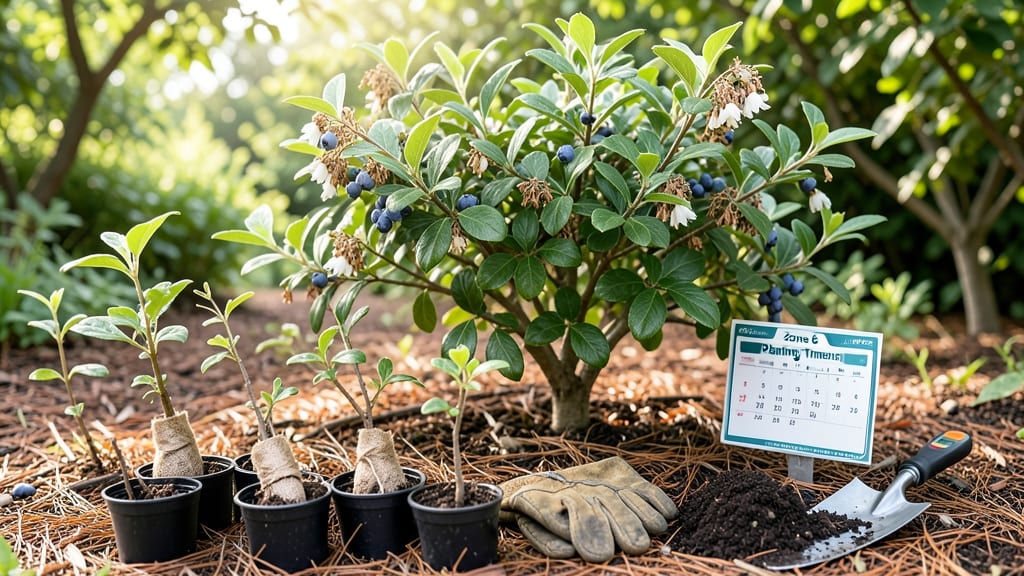
Planting your 🫐 blueberries at the wrong time in Zone 6 can mean the difference between a thriving bush and one that struggles to survive.
The key window—4 to 6 weeks after your last frost—isn’t just a suggestion; it’s the exact period when soil warms enough to support root growth while avoiding late-season cold snaps that can shock young plants.
If you’ve ever wondered why some gardeners get lush blueberry harvests while others deal with stunted bushes, timing is the answer.
In Zone 6 (where last frosts typically hit mid-April), rushing too early means cold soil that slows root development, while waiting too long risks exposing your plants to heat stress before they’re established.
Getting this right ensures your bushes take off strong and start producing fruit within 2 to 3 years.
I’ve helped countless gardeners—from beginners to seasoned growers—nail this timing, and the results speak for themselves. Whether you’re planting bare-root seedlings in late April or container-grown bushes in early June, the strategies I’ll share will give your blueberries the best possible start.
Let’s break down the exact weeks, soil prep, and regional tweaks to set you up for success.
Ready to avoid the common mistakes that lead to failed blueberry bushes? By the end of this guide, you’ll know not just when to plant, but how to prepare your soil, choose the right varieties for Zone 6, and protect your investment from frost risks.
Your future harvests of juicy, homegrown 🫐 blueberries start with these simple but critical steps.
Best planting weeks for blueberries in Zone 6: exact timing by month
Planting blueberries in Zone 6 requires precision—miss the window, and your bushes may struggle to establish roots before winter. The ideal planting window spans from late April to early June, calculated as 4-6 weeks after your last frost date.
This timing ensures soil temperatures stay above 40°F (4°C), which is critical for root development.
Zone 6 covers diverse regions like Pittsburgh, PA and St. Louis, MO, where last frost dates vary. In northern Zone 6a, aim for May 1-15, while southern Zone 6b can start as early as April 15.
Check your local USDA frost map to pinpoint your exact date.
Planting too early risks frost damage to tender roots, while late planting delays root establishment, leaving bushes vulnerable to winter dieback. The 4-6 week buffer after last frost balances these risks, giving roots time to harden before winter.
Soil temperature is just as critical as air temperature. Use a soil thermometer to confirm readings above 50°F (10°C) at 4 inches deep. Cold soil slows root growth, so wait patiently if early spring stays chilly.
For container-grown blueberries, the window extends slightly later—up to June 15—since potted plants adapt faster to temperature shifts. However, in-ground plantings should never delay beyond early June.
| Planting Window | Soil Temp Requirement | Risk of Early Planting | Risk of Late Planting |
|---|---|---|---|
| Late April (Zone 6b) | 45°F (7°C) minimum | Frost damage to roots | Low |
| May 1-15 (Zone 6a/b) | 50°F (10°C) ideal | Minimal (if soil warms) | Moderate (slower root growth) |
| June 1-15 (Containers) | 55°F (13°C) minimum | None | High (weak root system) |
If you’re in a warmer microclimate (e.g., near a south-facing wall), you might push planting to early April. Conversely, higher elevations in Zone 6 may need to wait until late May. Always prioritize soil temperature over calendar dates.
For bare-root blueberries, plant as soon as soil is workable—typically 2-3 weeks before container-grown plants. Soak roots overnight in water or compost tea to reduce transplant shock. Container-grown bushes, however, can handle slightly later planting due to their established root balls.
After planting, mulch heavily with pine needles or wood chips to insulate roots. This mimics their natural acidic forest-floor habitat while protecting against temperature fluctuations. Avoid synthetic mulches, which can alter soil pH.
Monitor your bushes closely for the first 30 days. Yellowing leaves or stunted growth may signal transplant shock or improper timing. Adjust watering (keep soil consistently moist) and shield from late frosts with frost cloth if needed.
By following these exact weeks, your Zone 6 blueberries will establish strong roots before winter, setting the stage for years of abundant harvests. Patience and precision now mean sweeter rewards in July and August.
How to prepare your blueberry planting site for maximum success
Preparing your soil before planting blueberries in Zone 6 is just as critical as choosing the right timing. These plants demand acidic soil (pH 4.5–5.5) and excellent drainage to thrive. Without proper prep, your bushes may struggle with nutrient uptake or root rot, leading to poor yields or even death.
Start by testing your soil’s pH using a home testing kit or sending a sample to your local extension office. If your soil is too alkaline, you’ll need to amend it with elemental sulfur or peat moss months before planting. This process takes time—don’t rush it!
Next, focus on improving drainage. Blueberries hate soggy roots, so avoid low-lying areas where water pools. If your soil is clay-heavy, mix in compost or sand to create a looser texture. For container growing, use a well-draining potting mix designed for acid-loving plants.
| Prep Task | When to Do It | Materials Needed |
|---|---|---|
| Test soil pH | 3–4 months before planting | pH test kit, sulfur (if needed) |
| Amend soil acidity | 2–3 months before planting | Peat moss, pine needles, or sulfur |
| Improve drainage | 1 month before planting | Compost, sand, or raised beds |
| Add organic matter | At planting time | Well-rotted compost or leaf mold |
Once your soil is ready, dig a hole twice as wide as the root ball but only as deep. This encourages roots to spread horizontally, which is key for stability and nutrient absorption. Gently loosen the roots of your bare-root or container-grown blueberry plant before placing it in the hole.
After planting, mulch around the base with pine straw or wood chips to retain moisture and suppress weeds. Avoid mulching too close to the stem—keep it 3–4 inches away to prevent rot.
This layer also helps regulate soil temperature, which is especially helpful during Zone 6’s hot summers and cold winters.
Finally, water deeply right after planting to settle the soil and eliminate air pockets. Keep the soil consistently moist (but not soggy) for the first 4–6 weeks to help roots establish. Avoid overhead watering, as wet foliage can invite fungal diseases like botrytis blight.