
Companion Plants
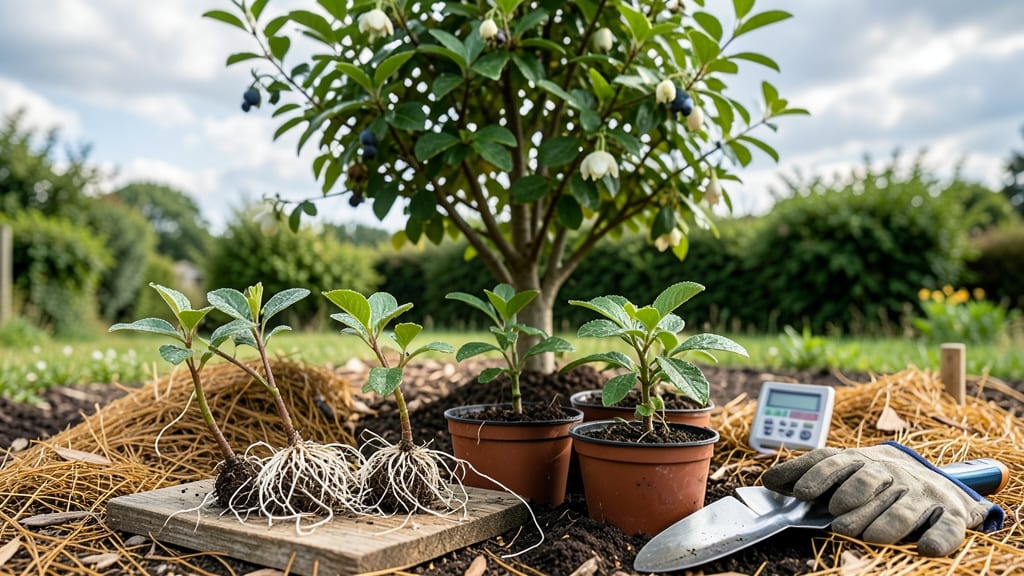
To plant blueberry bushes in Pennsylvania and guarantee a bountiful harvest, timing is everything—especially when matching varieties to your region's chill hours. Skip the guesswork, and you could end up with stunted growth or delayed fruit production, leaving you waiting years for that first sweet 🫐 harvest.
Pennsylvania’s climate varies dramatically from the cooler Appalachian zones to the warmer Piedmont region, which means what works in Zone 5 might fail in Zone 7. The key?
Planting in early spring (March–April) or early fall (September–October) when the soil is workable but before extreme heat or frost sets in.
Whether you’re growing high-chill varieties like ‘Duke’ (for northern PA) or low-chill types like ‘Patriot’ (better suited for southern PA), getting the timing right ensures your bushes enter dormancy properly and thrive year after year. I’ll break down the exact windows and regional adjustments you need to avoid common mistakes.
Ready to set your blueberry bushes up for success? Let’s dive into the critical steps to planting them at the perfect moment for your Pennsylvania garden.
Best planting months for blueberries in Pennsylvania by chill-hour needs
Pennsylvania’s climate varies dramatically from the cool mountain regions of the north to the warmer Piedmont in the south. This means chill-hour requirements (the number of hours below 45°F needed for fruit production) dictate the perfect planting window for your blueberry bushes.
Most PA gardeners thrive with high-chill varieties (600+ hours), but southern PA can support low-chill types (300–500 hours).
For bare-root blueberries, aim to plant in early spring (March–April) as soon as the ground thaws. This gives roots 6–8 weeks to establish before summer heat. Container-grown bushes, however, prefer early fall (September–October) planting, allowing roots to settle before winter dormancy.
Both timings avoid late frosts that can damage new growth.
Your USDA Zone (5–7) and local frost dates matter. Northern PA (e.g., Erie, Scranton) often sees later last frosts (May 1), while southern PA (e.g., Philadelphia, Harrisburg) warms earlier (April 15).
Use these dates to adjust your planting window by 2–3 weeks earlier in the south.
Chill hours are calculated by tracking temps below 45°F over winter. Most PA varieties need 600–900 chill hours. For example, ‘Bluecrop’ (700 hours) thrives in Pittsburgh, while ‘Duke’ (350 hours) suits warmer areas like Lancaster. Check your local agricultural extension office for precise chill-hour data.
If you’re unsure about chill hours, opt for ‘Patriot’ or ‘Jersey’, which are PA-bred varieties adapted to 500–800 chill hours. These are foolproof choices for most of the state. For container gardening, low-chill varieties like ‘Top Hat’ (300 hours) work well, even in small urban spaces.
| Variety | Chill Hours | Best Planting Month | PA Region Fit | Notes |
|---|---|---|---|---|
| Bluecrop | 700–900 | March–April | North/Central PA | Classic high-yield variety |
| Duke | 350–500 | April–May | South PA | Early ripening, great for heat |
| Patriot | 500–800 | March–April | Statewide | PA-bred, disease-resistant |
| Top Hat | 300–400 | September–October | Containers/South PA | Dwarf, low-chill option |
| Jersey | td style="padding: 10px; border: 1px solid #635a9b;">600–800March–April | North/Central PA | Large berries, late season |
For container planting, extend your window to late spring (May) if using potted bushes, as containers warm up faster. Just ensure pots have drainage holes and use acidic potting mix (pH 4.5–5.5).
In-ground planting requires well-draining, acidic soil, so test your soil’s pH before planting—amend with sulfur or peat moss if needed.
If you miss the spring window, fall planting (September–October) is your
Best planting months for blueberries in Pennsylvania by chill-hour needs
Pennsylvania’s climate ranges from Zone 5 in the north to Zone 7 in the south, which means your blueberry bushes need precise timing to thrive. The best windows are early spring (March–April) or early fall (September–October), when soil is workable but before extreme heat or frost.
For high-chill varieties (600+ hours), aim for March–April to ensure proper dormancy. Low-chill types (300–500 hours) can also go in September–October for a head start before winter.
Your chill-hour total determines the best planting window. Northern PA (e.g., Erie) needs high-chill varieties, while southern PA (e.g., Philadelphia) can handle lower-chill types. Check your local USDA zone and chill-hour data—most nurseries provide this info.
For example, ‘Duke’ (800+ hours) is perfect for Zone 5, while ‘Patriot’ (400–500 hours) thrives in Zone 6–7. Planting outside these windows risks stunted growth or delayed fruit.
🌱
| Planting Window | Chill-Hour Range | Best For (PA Region) | Soil Prep Tip |
|---|---|---|---|
| March–April | 600+ hours | Northern PA (Zones 5–6) | Amend soil with peat moss before planting. |
| September–October | 300–500 hours | Southern PA (Zones 6–7) | Use pine needles for mulch to retain acidity. |
| Late April (emergency) | 500+ hours | All regions (bare-root only) | Plant in partial shade if late. |
Adjust your timing based on frost dates. In northern PA, avoid planting after April 15—late frosts can damage new growth. Southern PA gardeners can extend fall planting to early November if soil temps stay above 40°F.
Always check your local last frost date (e.g., Pittsburgh averages April 10, while Philadelphia is April 15). For container-grown bushes, fall planting gives roots time to establish before winter.
Pro tip: If you miss the spring window, container-grown bushes can be planted in early fall (September). Just ensure they’re in the ground at least 6 weeks before frost to avoid root shock.
Use acid-loving fertilizer (like ammonium sulfate) at planting to boost early growth. Mulch with pine straw to maintain soil acidity and retain moisture.
🌿
For bare-root bushes, plant as soon as soil is workable—don’t wait for perfect weather. Soak roots in water for 2–3 hours before planting to reduce transplant shock. Dig a hole twice as wide as the root ball and mix in compost or peat moss to improve drainage.
Place the bush so the graft union (visible bump) is 2 inches above soil level to prevent rot. Water deeply after planting to settle the soil and encourage root contact.