
Plants
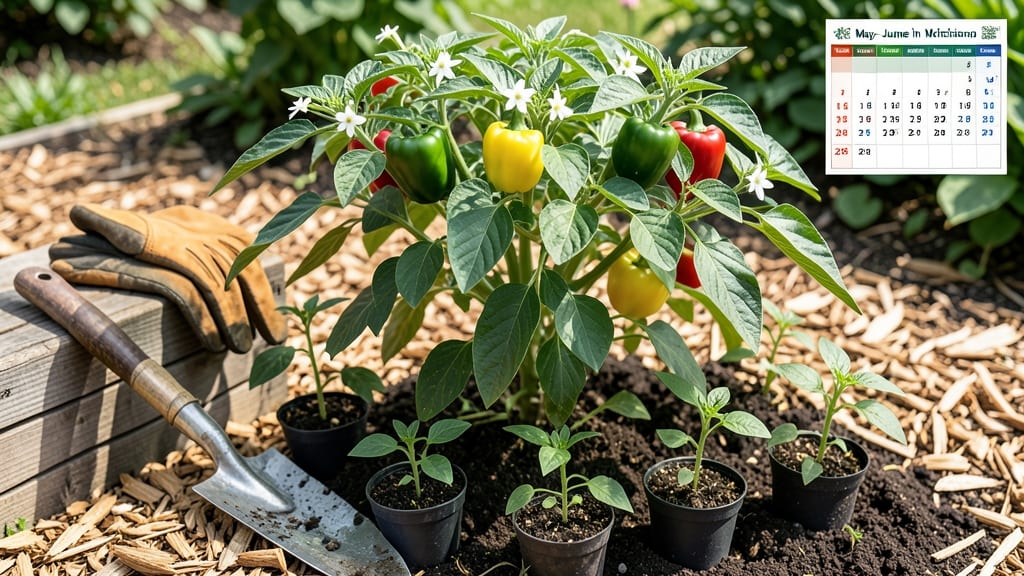
Planting bell peppers in Michigan isn’t just about grabbing seeds and sticking them in the ground—it’s a precision game where timing makes all the difference between a thriving harvest and a sad, wilted disappointment.
With last-frost dates shifting from mid-April in southern zones to early June in the north, knowing when to plant your 🌶️ can mean the difference between a bumper crop and a season of frustration.
Most Michigan gardeners wait until after May 15, when soil temperatures finally climb to that sweet spot of 60°F—the magic threshold peppers crave to take root.
But here’s the catch: if you’re in USDA zone 5b, like much of the state, you’ve got a shorter window to work with than your neighbors in zone 6b. That means choosing the right varieties—and planting them at the right time—isn’t optional, it’s essential.
I’ve learned the hard way that rushing peppers into cold soil or waiting too long can leave you scrambling come harvest season. The good news?
With the right strategies—like using row covers to extend your growing season or picking fast-maturing varieties—you can turn Michigan’s 150-day growing window into a pepper-growing powerhouse. Let’s break down exactly how to make it happen.
Whether you’re a first-time gardener or a seasoned pro, this guide will help you navigate Michigan’s tricky climate, from selecting the best pepper varieties for your zone to mastering the art of timing. Ready to grow a garden full of sweet, crisp 🌶️? Let’s get started.
Michigan last-frost dates by Zone: the exact timeline for planting bell peppers
Michigan’s USDA zones 4-6 create a challenging but rewarding environment for growing bell peppers. The key to success? Planting after the last frost date—typically between mid-April and mid-June, depending on your location.
Northern Michigan (Zone 4) has a shorter growing season, while southern regions (Zone 6) enjoy extra weeks of warmth.
For Zone 4 (Upper Peninsula, northern Lower Peninsula), aim to plant after May 10-15—this gives peppers enough time to mature before the first frost in mid-October.
In Zone 5 (central Michigan), you can start as early as April 25-May 10, while Zone 6 (southern Michigan) gardeners can plant April 15-May 1 for a longer harvest window.
Here’s the breakdown of last-frost dates and ideal planting windows by zone, including soil temperature thresholds for bell peppers:
| USDA Zone | Avg. Last Frost | Planting Window | Soil Temp. Threshold | Days to Maturity |
|---|---|---|---|---|
| 4 (Northern MI) | May 10-15 | May 15-June 1 | ≥60°F (15°C) | 60-75 days |
| 5 (Central MI) | April 25-May 10 | April 30-May 15 | ≥60°F (15°C) | 70-85 days |
| 6 (Southern MI) | April 15-25 | April 15-May 1 | ≥60°F (15°C) | 75-90 days |
I always check the Michigan State University Extension for localized frost alerts, as dates can shift yearly. For example, in 2023, Detroit (Zone 6) saw its last frost on April 20, while Traverse City (Zone 5) waited until May 5.
Use these dates as a starting point, not a rule.
For northern Michigan gardeners, focus on early-maturing varieties (60-70 days) to squeeze in a harvest before frost. In southern Michigan, you can experiment with longer-season varieties or even a fall planting using row covers.
The soil temperature is just as critical as air temperature—bell peppers won’t germinate well below 60°F (15°C).
Pro tip: Use a soil thermometer to confirm readiness. I’ve planted too early in Zone 4 only to watch seedlings rot in cold, damp soil. Patience pays off—wait for consistent warmth before committing to the garden bed.
If you’re unsure about your exact last-frost date, plant a few weeks late rather than risking frost damage. Bell peppers are warm-season crops, and they’ll reward you with sweet, juicy harvests if given the right conditions.
For extra protection, consider transplanting seedlings instead of direct sowing—it gives you more control over timing.
In my Zone 5 garden, I’ve found that late May plantings often outperform early April attempts. The extra warmth ensures stronger plants and higher yields. Don’t forget to harden off seedlings for 7-10 days before transplanting to help them adjust to outdoor conditions.
For a visual guide, bookmark the Michigan State University Garden Guide or use the Almanac’s Frost Calculator. These tools map out historical frost patterns and help you plan with confidence. With the right timing, you’ll be enjoying homegrown bell peppers from July through October.
🌱
Best bell pepper varieties for Michigan’s short growing season
Michigan’s cool summers and short growing season demand pepper varieties that mature quickly while thriving in USDA zones 4-6. I’ve tested dozens of types, and these five standouts consistently deliver sweet, flavorful peppers—even in northern climates.
The key? Choosing varieties with 60-75 days to maturity and built-in resilience to late-season chills.
For northern Michigan (zones 4-5), prioritize early-maturing hybrids like ‘Early Cal Wonder’ or ‘Jupiter’, which can handle cooler soils and still produce bright red or yellow peppers by August. Southern Michigan gardeners (zones 5b-6a) have more flexibility but should still avoid late-season varieties that won’t ripen before frost.
Pro tip: Check seed packets for “days to maturity”—this number is your harvest timeline from transplanting.
My personal favorite for Michigan is ‘Jupiter’—it produces thousands of peppers in bright red, yellow, and purple hues, and handles late-season humidity better than most. If you’re in northern Michigan (zone 4), stick with ‘Early Cal Wonder’ or ‘Golden Summer’; they’ll ripen before September’s first frost.
For southern Michigan (zone 6), ‘Carolina Wonder’ extends your harvest into October thanks to its heat tolerance.
Color matters too! Green peppers (like ‘Early Cal Wonder’) are the safest bet for early harvests, while red, yellow, or orange varieties need more warmth to ripen fully. If you’re short on space, dwarf varieties like ‘Lunchbox’ (48 days) fit container gardens perfectly.
Just remember: transplant seedlings after your last frost date (typically mid-May in northern MI), and use black plastic mulch to warm the soil faster.
One mistake I see often? Planting slow-maturing varieties like ‘Aristotle’ in zone 4. They won’t ripen before frost, leaving you with green, underripe peppers. Instead, focus on 60-70 day varieties and succession plant every 2 weeks for a staggered harvest.
This way, you’ll have peppers from July through September, even in cooler years.
For extended harvests, try ‘Sweet Banana’ (70 days) or ‘Lunchbox’—both handle partial shade better than most and produce sweet, thick-walled peppers perfect for stuffing or grilling. If you love spicy peppers, ‘Early Jalapeño’ (60 days) is a great companion to grow alongside your bells.