
Companion Plants
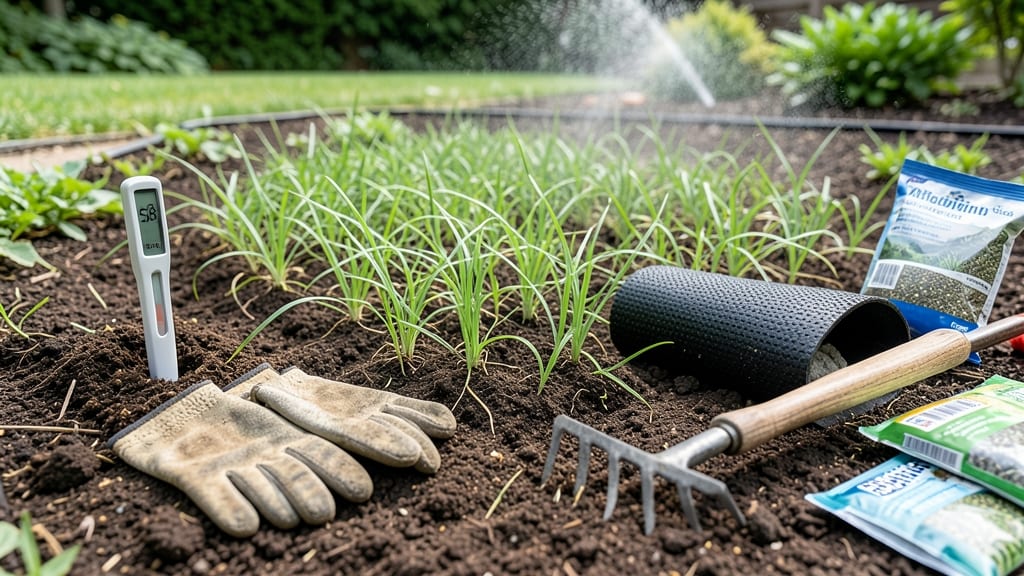
Planting your 🌱 Lawn Grass at the wrong time in spring can leave you staring at a patchy, struggling lawn instead of the vibrant carpet you dreamed of.
The key to success isn't just throwing seeds into the dirt—it's planting them when the soil is warm enough and the frost danger has passed.
Timing matters because grass seeds need consistent moisture and warmth to germinate properly. If you plant too early, a late frost can wipe out your progress, while planting too late might leave your lawn vulnerable to summer heat stress.
For USDA Zone 6a, like many northern regions, the ideal window opens 4-6 weeks before your last expected frost date—typically in early April.
But here's the game-changer: the best time isn't just about the calendar—it's about soil temperature. When the ground reaches 55-65°F, your seeds will sprout faster and establish stronger roots. I'll show you exactly how to check soil temperature and adjust your planting schedule for your specific climate.
Ready to transform your lawn from bare dirt to a lush green space? Let's dive into the exact weeks you should plant, plus soil prep tips and common mistakes to avoid. Your perfect spring lawn starts with the right timing—and we're about to make it easy.
Exact weeks before last frost for spring grass planting by region
Planting grass at the right time in spring ensures strong root growth before summer heat arrives. The ideal window is 4-6 weeks before your last expected frost date, but this varies dramatically by region.
In Northern states, this often means early April, while Southern states can start as early as February. Let’s break it down by climate zone to help you pinpoint the perfect timing for your lawn.
For cool-season grasses (like Kentucky bluegrass or fescue), the sweet spot is when soil temperatures reach 55-65°F (13-18°C). Warm-season grasses (like Bermuda or Zoysia) prefer 65-75°F (18-24°C) and should wait until after the last frost.
Misjudging this window can lead to weak germination or frost damage, so let’s dive into the specifics for your area.
🌱
| Region | USDA Zones | Last Frost Date | Ideal Planting Window | Soil Temp Goal |
|---|---|---|---|---|
| Northern (e.g., Minnesota, Maine) | 3-5 | May 1-15 | April 1-15 | 55-60°F |
| Mid-Atlantic (e.g., New York, Pennsylvania) | 6-7 | April 15-30 | March 15-April 1 | 55-65°F |
| Southern (e.g., Texas, Florida) | 8-11 | February 15-March 15 | February 1-March 15 | 65-75°F |
| Mountain West (e.g., Colorado, Utah) | 5-8 | April 15-May 1 | March 20-April 10 | 50-60°F |
⚠️ Pro Tip: Check your local USDA Plant Hardiness Zone and average frost dates for the most accurate timing.
If you’re in a transitional zone (like Zone 6 or 7), aim for late March to early April for cool-season grasses. For warm-season grasses, wait until mid-April to May when the ground warms up.
Planting too early risks frost damage, while planting too late may stress young grass before summer heat sets in.
For sod installation, the window is slightly narrower—2-4 weeks before last frost—since sod establishes roots faster than seed. This gives it a head start against weeds and drought. Always test your soil temperature with a soil thermometer to confirm readiness, especially if your local weather is unpredictable.
🌿
One common mistake is relying solely on calendar dates instead of soil conditions. For example, a cold snap in April can delay planting even if it’s technically the "right time."
Use a frost-free date calculator (like the Old Farmer’s Almanac) and monitor your local weather forecasts for 3-5 days of warm, dry conditions before planting.
In drought-prone areas, prioritize planting in early spring to give grass roots time to establish before summer water restrictions kick in. Overwatering can also be harmful, so aim for deep, infrequent watering (1 inch per week) once germination begins. Shallow watering encourages weak roots and fungal growth.
💧
Finally, if you’re overseeding an existing lawn, the timing shifts slightly—focus on early fall for cool-season grasses, as spring overseeding competes with established grass for nutrients. For new lawns, spring is your best bet, but late summer is ideal for warm-season grasses in hot climates.
5 Key factors that determine the best planting time for your grass type
Choosing the right time to plant grass in spring depends on more than just the calendar—your grass variety, soil temperature, and local climate all play critical roles.
Cool-season grasses like Kentucky bluegrass and fescue thrive when planted 4-6 weeks before the last frost, while warm-season types such as Bermuda or Zoysia need to wait until soil warms to 65°F (18°C) or higher. Even a 1-2 week delay can stunt root growth or invite weeds.
Another critical factor is whether you’re planting grass seed or sod. Seed requires consistent moisture and stable temperatures to germinate, while sod can handle slightly warmer conditions and establishes faster. If your area experiences late spring frosts, opt for sod to avoid damage to tender seedlings.
For example, in USDA Zone 5, planting seed too early (before April 15) risks frost damage, but sod can often be laid as early as mid-April.
Your local climate patterns also dictate the ideal window. In humid Southern states, planting too early can lead to fungal diseases like brown patch, while dry Western regions may require late spring planting to conserve moisture.
For instance, in Arizona (Zone 9a), warm-season grasses like Bermuda should be planted in late April to May, whereas in Minnesota (Zone 4a), cool-season tall fescue is best sown by mid-May.
Don’t overlook the moisture availability in your area. If your region experiences drought conditions in early spring, delay planting until rainfall increases or irrigation is reliable. A dry spell after seeding can leave your grass struggling to germinate, leading to bare patches or weed competition.
Always check your local weather forecast for 1-2 weeks of stable, mild conditions before planting.
Finally, consider your grass seed mix. Some blends include slow-germinating varieties that need longer to establish, while others are fast-germinating and can handle shorter windows.
For example, perennial ryegrass germinates in 7-14 days, making it ideal for late spring planting, whereas fine fescue takes 21-30 days and benefits from an earlier start. Always read the seed packet instructions for specific timing advice.
By aligning these 5 key factors—soil temperature, frost risk, grass type, seed/sod choice, and local climate—you’ll pinpoint the perfect planting window for a thick, healthy lawn that thrives all season long. Miss the mark, and you risk slow growth, weed invasion, or even failed germination. 🌱