
Plants
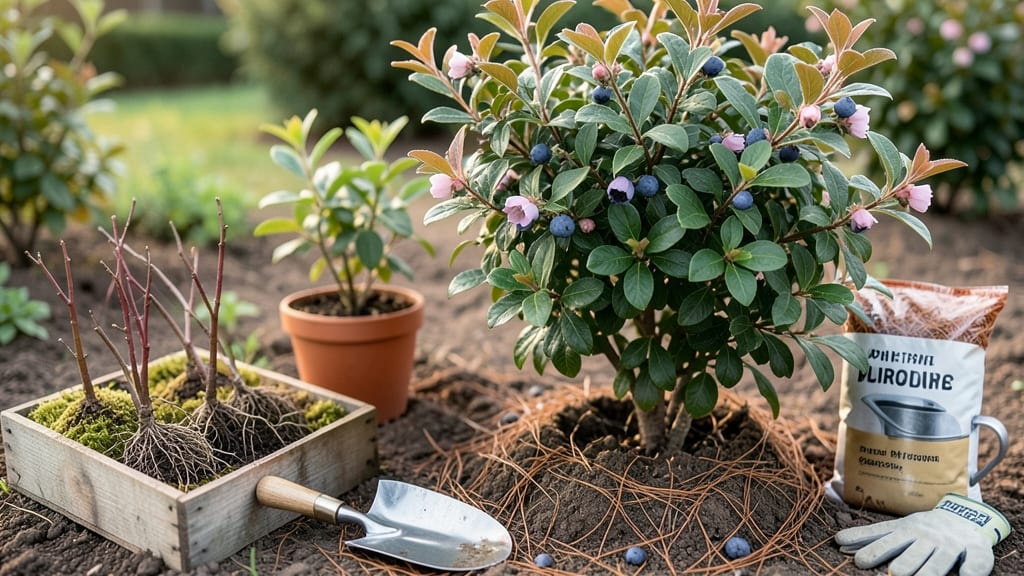
Planting blueberries in Maryland at the wrong time could mean the difference between a bountiful harvest of sweet 🫐 berries and years of disappointment. Maryland’s unique climate—with its humid summers and crisp winters—demands precise timing to ensure your bushes get the chill hours they need for fruit set.
Most gardeners in zones 6a-7b assume spring is the only option, but fall planting actually gives blueberries a head start. The key is understanding your specific chill-hour requirements—whether you’re in the cooler mountains or warmer coastal areas—and aligning planting with Maryland’s last frost dates.
In this guide, I’ll break down the ideal windows for both spring and fall, show you how to prep soil for Maryland’s clay-heavy conditions, and share which varieties thrive best in your microclimate. Whether you’re planting in-ground or containers, these steps will set you up for success.
Ready to grow blueberries that produce year after year? Let’s get started with the timing that makes all the difference in Maryland’s growing season.
Best planting months in Maryland based on blueberry chill-hours
Maryland’s blueberry bushes thrive when planted during their dormant season, but timing depends on your chill-hour zone. Northern counties like Baltimore and Frederick (Zone 6a) need 900+ chill-hours, while southern areas like Annapolis (Zone 7a) require just 500–700 hours.
Planting at the wrong time risks poor root establishment or winter damage.
For northern Maryland, aim for late September to early October—when soil stays 60°F+ for root growth but nights cool for dormancy. Southern regions can extend planting until mid-November, but avoid frost exposure. Spring planting (March–April) is riskier unless you use bare-root plants in cold frames.
Blueberries need 60–120 days of chill-hours to set fruit. Varieties like ‘Duke’ (800+ hours) suit Zone 6a, while ‘Patriot’ (500–600 hours) thrives in Zone 7a. Misjudging chill-hours leads to poor flowering or no harvest—critical for Maryland’s humid summers.
| Zone & County | Chill-Hours | Best Planting Window | Key Varieties |
|---|---|---|---|
| Zone 6a (Baltimore, Frederick) | 900+ hours | Late Sept–Early Oct | Duke, Bluecrop |
| Zone 6b (Hagerstown) | 700–900 hours | Mid-Sept–Mid-Oct | Jersey, Legacy |
| Zone 7a (Annapolis, Salisbury) | 500–700 hours | Late Sept–Nov | Patriot, Premier |
Fall planting gives roots 6–8 weeks to establish before winter. In Zone 6a, plant by October 15 to avoid frost heave. Use mulch (pine needles) to insulate roots—critical in Maryland’s freeze-thaw cycles.
Spring planting (March) works if soil thaws by 45°F, but bare-root plants need immediate watering.
Maryland’s last frost dates vary: April 15 in northern zones and March 20 in southern areas. Wait until soil warms to 50°F for spring planting. Test soil pH (4.5–5.5)—blueberries won’t thrive in alkaline soil. Amend with sulfur or peat moss if needed.
Container-grown blueberries can plant year-round in Maryland’s mild winters (Zone 7a), but fall remains ideal. Containers dry faster—water daily in summer and use acidic potting mix.
For in-ground plants, dig holes twice as wide as the root ball to prevent root circling, a common issue in compacted Maryland soil.
Local nurseries like Green Spring Gardens (Alexandria, VA) or Maryland Blueberry Farm (near Annapolis) stock Maryland-adapted varieties. Call ahead to confirm bare-root availability for fall planting. Avoid big-box stores—they often sell non-native varieties that struggle with Maryland’s humidity.
After planting, stake tall varieties (‘Bluecrop’) to prevent wind damage. Maryland’s spring winds can snap young stems. Prune dead wood in late winter (February) to encourage fruit-bearing canes. Mulch again in early spring to retain moisture during drought-prone months (June–July).
Monitor for blueberry maggots—a Maryland-specific pest. Use row covers in early summer to protect blooms. Harvest July–August when berries turn deep blue and easily detach. Store unwashed in the fridge for up to 2 weeks to preserve flavor.
🌱
Best planting months in Maryland based on blueberry chill-hours
Maryland’s USDA zones 6a-7b offer two prime windows for planting blueberries: late winter to early spring and early fall. The key?
Matching your variety to the chill-hour requirements of your region—northern Maryland (like Baltimore or Frederick) needs 800-900 chill hours, while southern areas (like Annapolis) thrive with 500-600 hours. Planting at the wrong time can delay fruit production by 1-2 years.
For spring planting, aim for February to early April, just before buds swell. This gives roots time to establish before summer heat arrives. Fall planting (September to October) is ideal for bare-root plants—they’ll root before winter and burst into growth in spring.
Maryland’s last frost date (mid-April) and first frost (mid-October) bookend these windows.
📌 PRO TIP: Use a chill-hour calculator (like the one from University of Maryland Extension) to confirm your zone’s exact needs. For example, ‘Patriot’ blueberries (a top Maryland pick) need 700-800 chill hours, while ‘Southern Highbush’ varieties manage with 300-500 hours.
If you miss the ideal windows, don’t panic. Container-grown blueberries can be planted in late spring (May), but expect a smaller first-year harvest. For bare-root plants, November is a backup option—just plant before the ground freezes.
Maryland’s humid climate demands quick root establishment, so avoid planting in summer heat (June-August) unless using shade cloth.
Local nurseries like Grow How (Hunt Valley) or Blueberry Fields Farm (Chestertown) offer Maryland-adapted varieties and can help you pick the right timing. Always check their planting calendars, as microclimates (like urban heat islands) can shift chill-hour needs by 100+ hours.
Timing isn’t just about months—it’s about soil temperature. Wait until the ground warms to 50°F for spring planting or cools to 60°F in fall. Use a soil thermometer to avoid planting too early. 🌱