
Trees
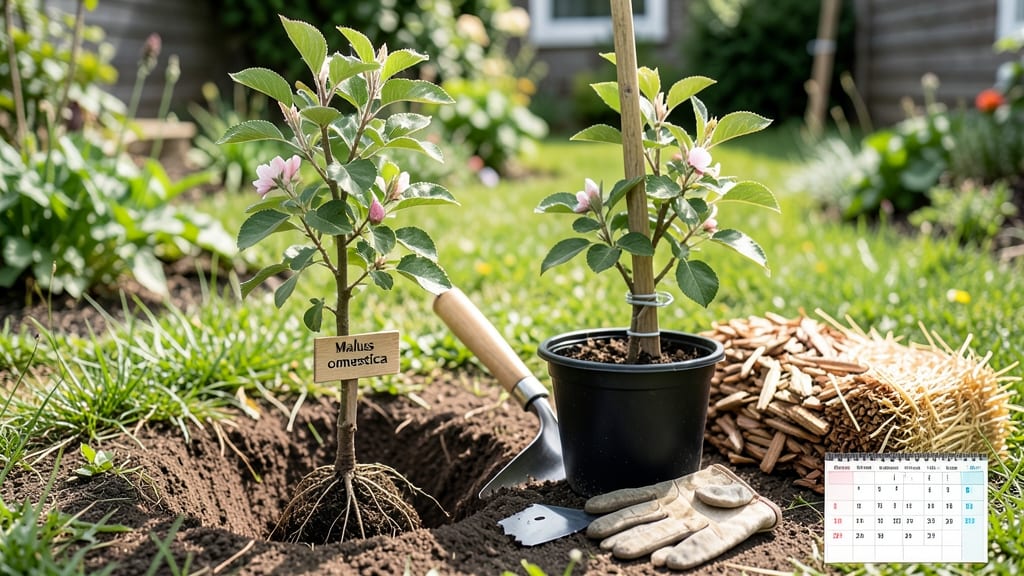
Timing your apple tree planting in Iowa’s Zone 5B climate can mean the difference between a thriving orchard and a struggling sapling—especially when chill hours matter as much as frost dates.
If you’ve ever wondered why some trees flourish while others fail, the answer likely lies in matching varieties to Iowa’s 400-900 chill hours and planting them at the right moment.
Most gardeners in Iowa plant their 🍎 apple trees in early spring or fall, but getting the details right—like soil prep, root protection, and variety selection—is where success begins.
Whether you’re choosing a Honeycrisp for its crisp sweetness or a Jonathan for its hardiness, understanding your microclimate’s quirks (like southern Iowa’s slightly warmer winters) will help you avoid common pitfalls.
In this guide, I’ll break down exactly when to plant—whether you prefer bare-root trees in spring or container-grown varieties in fall—and how to prepare your soil for Iowa’s short growing season.
You’ll also learn which local varieties thrive best in your specific corner of the state, so you can start harvesting homegrown apples in just a few years.
Ready to turn your backyard into an orchard? Let’s dive into the chill-hour matching strategy that’ll set your apple trees up for long-term success—no guesswork required.
Iowa’s best planting months for apple trees (chill-hour breakdown by variety)
Iowa’s Zone 5B climate demands careful timing when planting apple trees. The key factor? Chill hours—the number of hours below 45°F your tree needs to produce fruit. Most Iowa varieties require 600–1,000 chill hours, but some newer varieties need fewer.
Planting too early or late can disrupt this critical process, leading to poor fruit set or even tree death.
In Iowa, early spring (March–April) and early fall (September–October) are the two best windows. Spring planting gives roots time to establish before summer heat, while fall planting allows roots to grow before winter dormancy.
Both methods work, but fall planting is often preferred for bare-root trees because it mimics natural dormancy cycles.
Let’s break down the chill-hour requirements for Iowa’s most popular apple varieties. Matching your tree’s needs to Iowa’s climate is the secret to a fruitful harvest. For example, Honeycrisp thrives in Iowa’s chill zone, while Fuji may struggle in northern areas due to lower chill hours.
🍎
| Variety | Chill Hours Needed | Best Planting Month | Iowa Risk Factor | Notes |
|---|---|---|---|---|
| Honeycrisp | 800–1,000 | March–April or September | Low (ideal for Iowa) | Sweet, crisp, and disease-resistant. |
| Fuji | 900–1,200 | April (spring only) | High (northern Iowa) | Needs warmer microclimates; may fail in cold winters. |
| Jonathan | 600–800 | March or September–October | Low (great for Iowa) | Classic heirloom; reliable in Zone 5B. |
| Gala | 500–700 | March–April or September | Low (adaptable) | Early ripening; good for shorter seasons. |
| McIntosh | 700–900 | September–October (fall preferred) | Medium (watch for late frosts) | Juicy but prone to scab; needs fungicide. |
Spring planting in March or April is ideal for container-grown trees or if you missed fall’s window. The soil is workable, and roots can establish before summer heat. However, planting too early—before last frost (April 15)—risks frost damage to new growth.
If you choose spring, opt for dwarf or semi-dwarf varieties like Honeycrisp or Gala, which establish faster.
Fall planting, from September to early October, is my top recommendation for bare-root trees. The tree enters dormancy naturally, reducing transplant shock. Just ensure the ground isn’t frozen—aim for 4–6 weeks before first frost (October 15).
This gives roots time to grow before winter. For container-grown trees, fall planting is riskier due to limited root development before cold sets in.
One common mistake? Planting Fuji or Granny Smith in northern Iowa without checking chill-hour data. These varieties often need 1,000+ chill hours, which southern Iowa may provide, but northern areas might not.
Always verify your local chill-hour zone—tools like the USDA Plant Hardiness Zone Map or Iowa State University Extension can help.
🌱
Pro tip: If you’re unsure about chill hours, ask your local nursery for Iowa-adapted varieties. They often stock low-chill hybrids like ‘Liberty’ or ‘Zestar!’ series, which thrive in Zone 5B with minimal risk.
These varieties are bred to handle Iowa’s unpredictable springs and early frosts, making them a safer bet for beginners.
Finally, remember that soil temperature matters just as much as air temperature. Planting when the soil reaches 40°F ensures roots can absorb moisture and nutrients. Use a soil thermometer to check—this small tool can save your tree from a slow, struggling start.
Pair it with well-draining soil and compost amendments, and your apple tree will have the best chance to thrive in Iowa’s challenging climate.
How to match apple tree varieties to Iowa’s microclimates (avoiding common mistakes)
Iowa’s Zone 5B climate isn’t one-size-fits-all—northern counties like Dubuque average 2,000 chill hours, while southern areas like Des Moines may only hit 1,500 hours. This mismatch can leave your Honeycrisp tree blooming but failing to set fruit. The key? Choosing chill-hour-matched varieties for your specific microclimate.
For northern Iowa, prioritize varieties like Haralson or Zestar!, which thrive with 1,800+ chill hours. In central/southern Iowa, opt for Fuji or Gala, which need just 1,300–1,600 hours.
Even within a county, urban areas can be 5°F warmer than rural zones—so check local USDA microclimate maps before buying.
Soil type also plays a role: Clay-heavy soils in eastern Iowa drain poorly, while sandy loam in western Iowa dries out faster. Amend clay with compost or sand; for sandy soil, add organic matter to retain moisture. pH matters too—Iowa’s native soils often run 6.0–7.0, but apples prefer 5.5–6.5.
Urban gardeners face extra challenges: heat islands from pavement can reduce chill hours by 10–20%, while limited space may force dwarf varieties like Liberty or Enterprise.
These disease-resistant options also handle Iowa’s apple scab and cedar apple rust better. If planting near cedar trees, choose rust-resistant varieties like Jonagold or Jonamac.
Test your chill-hour zone using the Iowa State University Extension’s chill-hour calculator. Enter your zip code and average winter lows to get precise data. For example, Cedar Rapids sits at 1,600 hours, while Ames hits 1,750 hours.
Match your tree’s needs to these numbers—or risk blooms that drop before fruiting.
Pro tip: Cross-pollinate with two compatible varieties (e.g., Honeycrisp + Fuji) for better yields. In Iowa, pollinators like bees thrive from late April–early May, so align blooming times. If space is tight, consider self-pollinating varieties like Gala or Ambrosia, though yields may be 20–30% lower.
Finally, avoid late-spring frosts by planting late-blooming varieties like Jonagold (blooms 2 weeks after Honeycrisp). Check Iowa’s frost-free date maps—most areas hit April 15, but northern Iowa can delay until May 1. Time your planting to give roots 6–8 weeks to establish before buds swell.