
Trees
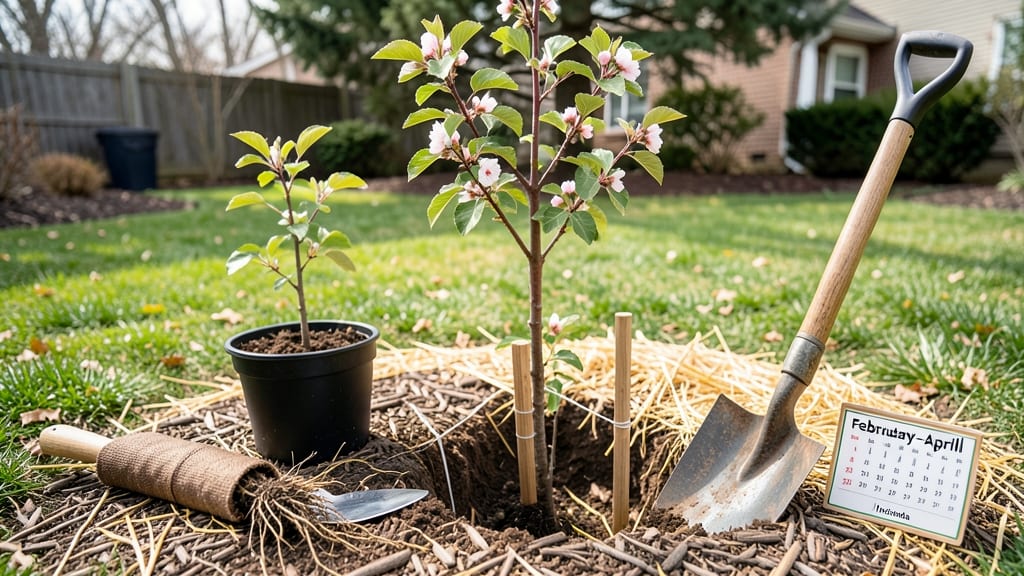
Planting an apple tree 🍎 in Indiana at the wrong time could mean struggling with weak roots or frost damage—but timing it just right sets you up for years of sweet harvests.
With Indiana’s 5b-6b climate, you’ve got two prime windows: early spring when the soil warms or late fall before the ground freezes. I’ll break down which option works best for your region, whether you’re in Indianapolis or Evansville, and how to prep your soil for maximum success.
You’ll also discover how to match your apple variety to Indiana’s chill hours—because planting a GoldRush or Haralson at the wrong time could leave you with no blooms (and no apples!). Let’s get those roots in the ground the right way.
From bare-root trees to container-grown saplings, I’ll cover everything you need to know to avoid common mistakes and give your new tree the best possible start. Ready to plant with confidence?
Best planting months for Indiana apple trees by chill-hour requirements
Indiana’s USDA Zones 5b-6b create unique challenges for apple tree planting, where chill-hour requirements (300-1,000 hours below 45°F) determine variety success. In cities like Indianapolis and Fort Wayne, timing must align with last frost dates (typically April 15) and first frost dates (around October 15).
Most apple varieties thrive with 600-900 chill hours, common across Indiana, but low-chill varieties like 'GoldRush' (300-400 hours) work better in southern Indiana (Zone 6b). Northern regions (Zone 5b) favor higher-chill varieties like 'Haralson' (900+ hours) to ensure reliable blooming.
For bare-root trees, early spring (March-April) is ideal—roots wake up before leaves sprout, reducing transplant shock. Container-grown trees, however, can be planted year-round in Indiana, offering flexibility for gardeners with unpredictable schedules.
Fall planting (October-November) is another strong option, allowing roots to establish before winter dormancy. This method works best in cooler microclimates like Evansville, where soil temperatures stay above 40°F for root growth.
Here’s how Indiana’s regions align with planting windows and chill-hour needs:
| Region | USDA Zone | Chill Hours | Best Planting Months | Recommended Varieties |
|---|---|---|---|---|
| Northern Indiana (Fort Wayne) | 5b | 800-1,000 | March-April or October | Haralson, Rome, Jonathan |
| Central Indiana (Indianapolis) | 6a | 600-800 | March-April or October-November | GoldRush, Fuji, Honeycrisp |
| Southern Indiana (Evansville) | 6b | 400-600 | April or September-October | Anna, GoldRush, Braeburn |
When selecting varieties, prioritize those matched to your chill hours—mismatches lead to poor blooming or no fruit. For example, 'Honeycrisp' (700-900 hours) thrives in central Indiana but may fail in northern Indiana without supplemental chill hours.
Soil temperature is critical: roots need 50°F+ soil temps to grow actively. Use a soil thermometer to confirm readiness before planting. In sandy soils (common in northern Indiana), watering deeply after planting helps stabilize roots faster.
Pro tip: Plant 2-3 inches deeper than the root flare (where roots meet trunk) to protect against winter heaving3-4 inches of wood chips to insulate roots and retain moisture.
For container-grown trees, spring planting (April) is safest—roots won’t compete with summer heat. If planting in late fall, choose dwarf or semi-dwarf varieties (like 'Sansa') for easier winter care.
Fall vs. spring planting: which works better in Indiana’s climate?
Indiana’s USDA zones 5b-6b give you two prime windows for planting apple trees: early spring and fall. Each season offers unique advantages, and choosing the right time can mean the difference between a thriving tree and a struggling one. Let’s break down the pros and cons for Indiana gardeners.
Spring planting, typically between March and April, aligns with Indiana’s last frost dates (around April 15). This timing allows roots to establish before summer heat sets in.
However, early spring can still bring late frosts, which may stress young trees. Container-grown trees are easier to plant in spring since they’re less affected by soil conditions.
Fall planting (October-November) is ideal for bare-root trees because cooler temperatures reduce stress, and trees enter dormancy before winter. Indiana’s first frost usually arrives by mid-October, so planting 4-6 weeks before frost gives roots time to settle. Fall-planted trees also benefit from moisture retention and fewer weeds.
Spring Planting
- ✅ Faster growth in warm soil
- ✅ Easier to plant container-grown trees
- ✅ Avoids winter heaving (soil freezing/thawing)
Fall Planting
- ✅ Better root establishment before dormancy
- ✅ Reduced stress from summer heat
- ✅ Fewer weeds in cooler months
Cons
- ❌ Late frost risk in early spring
- ❌ Drier soil in late spring
Cons
- ❌ Limited time window before frost
- ❌ Soil may be too wet in late fall
For Indiana’s northern regions (like Fort Wayne), fall planting often works better due to shorter growing seasons. In southern Indiana (Evansville area), spring planting may be safer to avoid early frosts. Always check local frost dates and choose a time when soil temperatures are above 40°F for optimal root growth.
If you’re unsure, container-grown trees offer flexibility—they can be planted in early spring or late fall without worrying about soil conditions. Just ensure the graft union stays 2-3 inches above soil to prevent rot. Mulch heavily after planting to retain moisture and protect roots from temperature swings.
Remember, Indiana’s microclimates vary—urban areas may stay warmer than rural spots. Use these guidelines as a starting point, then adjust based on your specific location and the chill-hour requirements of your apple variety. With the right timing, your tree will reward you with abundant harvests for decades! 🍏🌳