
Companion Plants
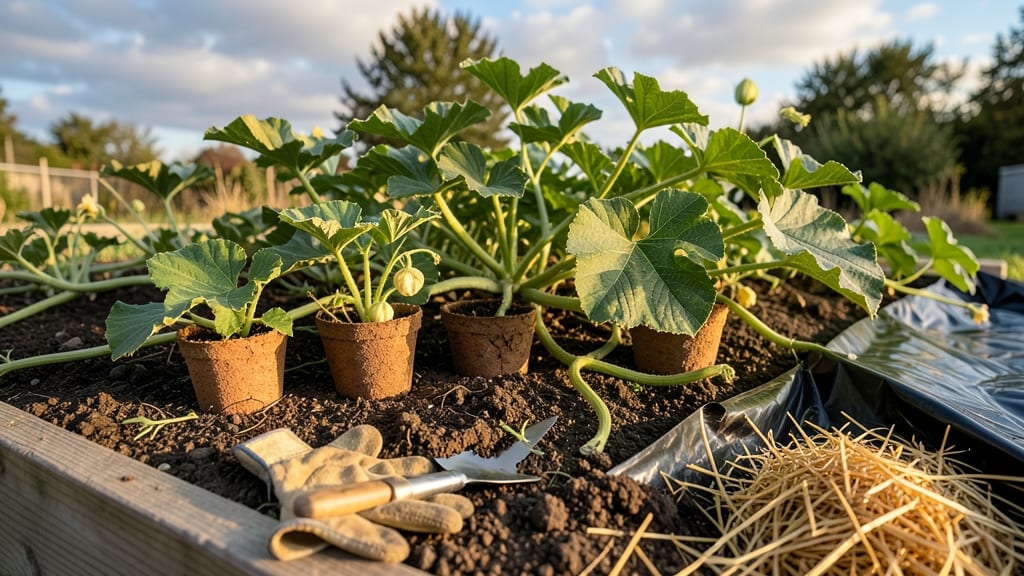
Timing your pumpkin planting in Ohio isn't just about the calendar—it's about catching that perfect soil temperature window of 60°F+ for fast germination and avoiding frost damage.
With Ohio's 6a climate, you've got just 165 frost-free days to grow a thriving 🎃 crop, making those early April to June plantings critical for success.
Most gardeners make the mistake of planting too early when the soil is still cool, leading to slow starts and weak vines. I've learned that waiting until late April or early May—when the ground consistently stays above 55°F—makes all the difference in Ohio's unpredictable spring weather.
This timing also gives your pumpkins enough warm days to mature before that first frost in October.
But here's the secret: you don't always need to start from seeds. For Ohio's shorter season, many gardeners opt for direct sowing after the last frost date, using black plastic mulch to warm the soil faster.
This method works especially well for fast-maturing varieties like Jack Be Little, which can be ready in just 75 days—perfect for our 90-day growing window.
Let me show you exactly how to time your planting for Ohio's microclimates, which pumpkin varieties perform best in our region, and how to prepare your soil for maximum growth.
By the end, you'll know exactly when to put those seeds in the ground for a bumper crop of 🎃s this fall.
Ohio pumpkin planting calendar: best months and soil temperature triggers
Ohio gardeners face a unique challenge with pumpkin planting—unpredictable spring weather demands precise timing. The key to success lies in understanding soil temperature triggers and regional frost patterns. In most of Ohio, aim to plant pumpkin seeds between mid-April and early June, but adjust based on your microclimate.
Northern Ohio (USDA Zone 5) has a shorter growing season, so focus on early May planting for varieties like 'Jack Be Little' that mature in 75-85 days. Southern Ohio (Zone 6-7) can start as early as late April, giving you more flexibility for larger varieties like 'Sugar Pie.'
Here’s the critical rule: Wait until soil temperatures consistently reach 60°F (15.5°C) before planting. Pumpkin seeds won’t germinate reliably below 55°F (13°C), and cooler soil slows growth. Use a soil thermometer to check—this is your best tool for Ohio’s variable springs.
Ohio’s average last frost date ranges from mid-April in southern regions to early May in the north. Planting too early risks frost damage to young seedlings, while waiting too long may cut your harvest short before the first frost in October.
Balance these factors with your chosen variety’s days to maturity.
🌱 Ohio Pumpkin Planting Summary
| Region | Best Planting Window | Soil Temp Threshold | Key Varieties |
|---|---|---|---|
| Northern Ohio (Zones 5) | Late April–early May | 60°F+ (15.5°C+) | Jack Be Little, Howden |
| Central Ohio (Zones 6) | Mid-April–mid-May | 58°F+ (14.5°C+) | Sugar Pie, Cinderella |
| Southern Ohio (Zones 7) | Late March–early June | 55°F+ (13°C+) | Giant Cabinent, New England Pie |
📅 Pro Tip: Use black plastic mulch to warm soil by 5-10°F, extending your planting window by 2-3 weeks.
For Ohio gardeners, late May planting is a safer bet if early spring stays cool. This gives seeds time to germinate before summer heat arrives. Monitor your local National Weather Service forecasts for 7-day soil temperature predictions—this data is more reliable than air temperature alone.
Direct sowing is the preferred method for pumpkins, but if you’re worried about late frost risks, start seeds indoors 4-6 weeks before your target outdoor date. Use biodegradable pots to transplant seedlings without disturbing roots. Harden them off for 7-10 days before moving to the garden.
Ohio’s humidity levels also play a role—high moisture can delay germination. If your soil feels damp but isn’t warm enough, consider raising beds or using row covers to create a warmer microclimate. Aim for well-draining soil with a pH between 6.0 and 7.0 for optimal growth.
Remember: Pumpkins need space—vines can spread 10-20 feet! Plan your garden layout accordingly, leaving 2-3 feet between plants for dwarf varieties and 4-5 feet for standard types. This spacing prevents disease and ensures better air circulation.
By following these Ohio-specific guidelines, you’ll maximize your pumpkin harvest potential. The key is patience—wait for that 60°F soil temperature, and your seeds will thank you with faster germination and healthier vines.
How to time pumpkin planting for Ohio’s unpredictable weather patterns
Ohio’s spring frost dates can shift dramatically from year to year, making pumpkin planting a delicate balance. While the average last frost falls around mid-April, late frosts in Northern Ohio (like Columbus) can delay planting until May 1-15.
Southern Ohio (like Cincinnati) may see workable soil as early as late March, but don’t rush—soil temperature matters more than calendar dates.
Pumpkin seeds need soil temps of 60°F+ to germinate reliably. Use a soil thermometer to check depths of 2-4 inches. If your soil is cold, try black plastic mulch or cold frames to accelerate warming.
In 2022, many Ohio gardeners saw 3-4 week delays in planting due to cool springs—don’t let that happen to you!
🌱 Ohio Pumpkin Planting Adjustment Guide
- 📅 Late Frost Risk? Wait until May 15 in Northern Ohio (Zones 5-6)
- 🌡️ Soil Too Cold? Use black plastic mulch to add 5-10°F warmth
- 🌧️ Rainy Spring? Plant on dry, sunny days to prevent rot
- 🔄 Backup Plan? Start seeds indoors 2-3 weeks early for late starts
- ☀️ Sunny Stretch? Plant early varieties by April 15 in Southern Ohio
For direct-sown pumpkins, aim for planting between April 15 and May 31. If you miss this window, opt for fast-maturing varieties (like Jack Be Little) that can mature in 75-85 days.
Another trick? Plant a second crop in early June for fall harvests—just choose varieties with 90-100 day maturity.
Watch your local weather forecasts for 5-day outlooks—a stretch of 70°F+ days signals it’s safe to plant. If frost warnings appear after planting, cover seedlings with frost cloth until they’re 3 inches tall.
In 2020, Columbus gardeners who planted May 10 saw 20% larger pumpkins than those who planted April 1 due to better soil conditions.
Pro tip: Test your soil pH (ideal range: 6.0-6.8) before planting. Ohio’s clay-heavy soils often need compost or aged manure to improve drainage.
Amend beds 2-3 weeks before planting to give nutrients time to integrate. Mulch heavily after planting to retain moisture and suppress weeds—critical during Ohio’s hot, dry summers.
Remember, pumpkins need space—vines spread 10-20 feet! If your garden is small, try bush varieties like Sugar Pie or plant near trellises for vertical growth. And if all else fails, container-growing works for small varieties—just use 5-gallon pots and plant one per container.