
Companion Plants
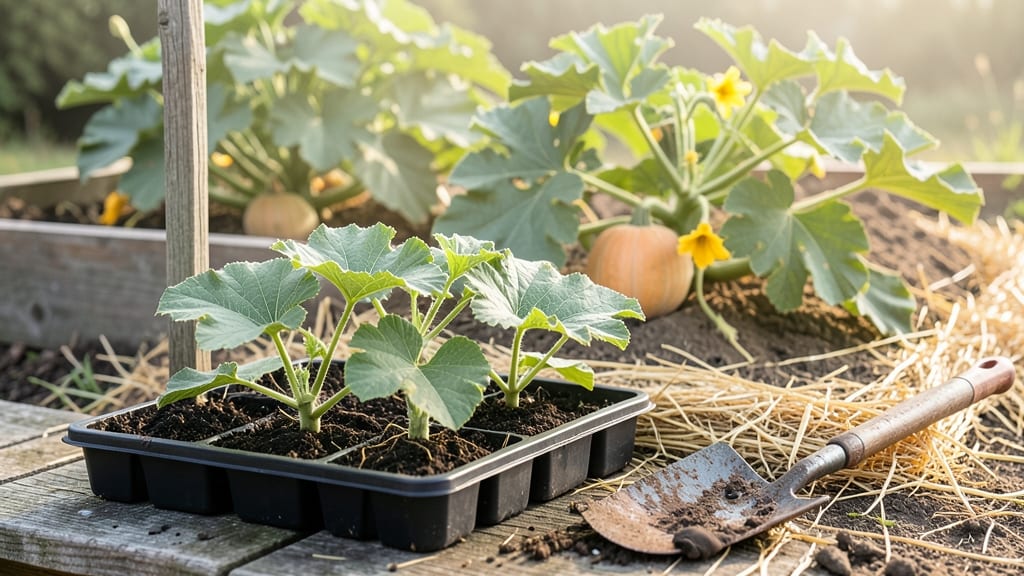
Planting pumpkins in Michigan at the wrong time can leave you with wilted vines or underripe fruit—so timing matters more than you might think. With USDA zones 5b-6b and a short growing season, knowing when to plant your 🎃 seeds is the key to a successful harvest.
Most Michigan gardeners start their pumpkin seeds indoors in March to get a head start, then transplant them after the last frost in mid-April to mid-June.
But not all varieties thrive on the same schedule—summer squash needs an earlier start, while giant carving pumpkins may need a later planting window.
If you're wondering whether to direct-sow or start indoors, I’ll break down the best approach for your specific variety. Plus, I’ll share tips for extending your growing season so you can squeeze in that perfect fall harvest before frost hits in mid-October.
Ready to avoid common mistakes and maximize your pumpkin yield? Let’s dive into the exact planting dates—and what to watch for—to ensure your vines spread wide and your pumpkins grow plump and ready for harvest.
Best pumpkin planting dates in Michigan by variety type
Michigan’s USDA zones 5b-6b give us only about 150 frost-free days, so choosing the right pumpkin variety and planting at the perfect time is critical. The wrong timing can leave you with underdeveloped fruit or frost-damaged vines.
Let’s break down the best planting windows for each type of pumpkin—from quick-growing summer squash to long-season carving pumpkins—and how to maximize your harvest before Michigan’s first frost.
Pumpkins generally need 75-120 days to mature, depending on the variety. In Michigan, this means starting seeds at the right time—whether indoors or directly in the garden—is everything. Soil temperatures below 60°F (15°C) will stall germination, while late plantings risk immature fruit before frost.
Let’s match your pumpkin type to Michigan’s planting calendar for success.
🎃 Quick Tip: Always check your local last frost date (typically mid-April in Southern Michigan, late May in the North) and count backward from your variety’s days to maturity to calculate your ideal planting window.
| Variety Type | Days to Maturity | Best Planting Time (Michigan) | Planting Method | Harvest Window |
|---|---|---|---|---|
| Summer Squash (e.g., 'Jack Be Little', 'Waltham Butternut') | 75-90 days | Late May to early June | Direct-sow after last frost | Late August to early October |
| Carving Pumpkins (e.g., 'Howden', 'New England Pie') | 90-100 days | Mid-April (indoors) or late May (direct-sow) | Start indoors 3-4 weeks before last frost | Late September to mid-October |
| Winter Storage (e.g., 'Long Island Cheese', 'Sugar Pie') | 100-120 days | Mid-April (indoors) or early June (direct-sow) | Start indoors 4-5 weeks before last frost | October (before first frost) |
| Miniature/Pie Pumpkins (e.g., 'Baby Boo', 'Munchkin') | 80-90 days | Late April to early June | Direct-sow or start indoors 2-3 weeks early | Late September |
🌱 Note: Adjust dates 1-2 weeks earlier for Southern Michigan (e.g., Detroit, Kalamazoo) and 1-2 weeks later for Northern Michigan (e.g., Traverse City, Marquette).
For summer squash varieties, you can afford to plant later because they mature quickly. These are perfect for gardeners in Northern Michigan where the season is shorter. Direct-sow them after the soil warms to at least 60°F (15°C), usually around late May.
Look for varieties like 'Jack Be Little', which only needs 75 days to harvest.
If you’re growing carving pumpkins like 'Howden' or 'New England Pie', aim to have seedlings ready to transplant 2-3 weeks after your last frost date. In Southern Michigan, this might mean transplanting in early June, while Northern Michigan gardeners should wait until late June.
These varieties need 90-100 days, so planting too late risks immature fruit before frost.
Pro Tip: Use black plastic mulch to warm the soil faster and extend your planting window by 1-2 weeks. This is especially helpful in Northern Michigan where cooler soils delay germination.
For winter storage pumpkins, like 'Long Island Cheese' or 'Sugar Pie', you’ll need to start seeds indoors 4-5 weeks before your last frost. These varieties take 100-120 days to mature, so they’re only viable in Southern Michigan or with season-extending techniques.
In Northern Michigan, consider container growing near a sunny wall or greenhouse to protect them from early frosts.
Finally, miniature or pie pumpkins are a great compromise—they mature in 80-90 days and produce smaller fruit that’s easier to grow in Michigan’s climate. Plant them late April to early June, either directly in the garden or start indoors 2-3 weeks early for a head start.
Varieties like 'Baby Boo' or 'Munchkin' are ideal for container gardens or small spaces.
Always remember: Soil temperature matters more than air temperature. Use a soil thermometer to confirm the soil is at least 60°F (15°C) before planting. If it’s cooler, wait—cold soil delays germination and can lead to damping off, a fungal disease that kills seedlings.
🌿 With the
How to adjust planting dates for Michigan’s microclimates
Michigan’s diverse climate—from the Upper Peninsula’s cooler zones to Southern Michigan’s longer summers—means your pumpkin planting timeline should shift based on where you live.
Even within 50 miles, frost dates can vary by 2-3 weeks, so local adjustments are key to avoiding early frost damage or overly mature pumpkins before harvest.
Use the USDA Plant Hardiness Zone Map (Michigan ranges from 4a to 6b) as a starting point, but cross-reference with your local frost dates. For example, Traverse City (Zone 5b) typically has a last frost around May 15, while Detroit (Zone 6a) averages May 1.
This 4-week difference directly impacts when you should plant.
Urban gardeners in cities like Grand Rapids or Ann Arbor may face heat islands that push planting dates 1 week earlier than rural areas, thanks to warmer microclimates.
Meanwhile, Northern Michigan’s shorter growing season (only 120-140 frost-free days) demands earlier starts or fast-maturing varieties like ‘Jack Be Little’ (75 days) over ‘Howden’ (110 days).
🌡️ Michigan Microclimate Adjustments
- Northern Michigan (Zones 4a-5a): Plant late May to early June for fast varieties (75-90 days). Use black plastic mulch to warm soil.
- Central Michigan (Zones 5b-6a): Ideal window: May 1-15. Start indoor seeds in March for transplanting after last frost.
- Southern Michigan (Zone 6b): Plant April 15-May 1. Extend season with row covers or cold frames for late varieties.
- Urban Heat Islands: Plant 1 week earlier than rural areas. Monitor soil temps—aim for 60°F+.
- High-Elevation Areas: Delay planting by 2 weeks due to cooler nights. Choose dwarf varieties like ‘Minnesota Golden’.
For Northern Michigan gardeners, consider starter plants instead of direct sowing to shave 2-3 weeks off the growing season. Transplant 4-5 week old seedlings after your last frost date, spacing them 4-6 feet apart to give vines room to sprawl.
In Southern Michigan, you can afford to direct-sow in late April if you’re growing heat-tolerant varieties like ‘Cinderella’.
Extending your growing season is easier with seasonal tools. Use row covers to push planting 2 weeks earlier in spring or delay harvest by 3-4 weeks in fall. For late-season varieties, try hoop houses or cold frames to protect pumpkins until mid-October.
Always check Michigan State University Extension’s frost maps for real-time updates—they’re updated annually based on local weather patterns.
Pro tip: Test your soil temperature with a soil thermometer before planting. Pumpkin seeds need soil temps of 60°F+ to germinate—if it’s cooler, wait 1-2 weeks or use black plastic mulch to warm the soil faster.
In cool, wet springs, this can mean the difference between success and failure.
🌱