
Plants
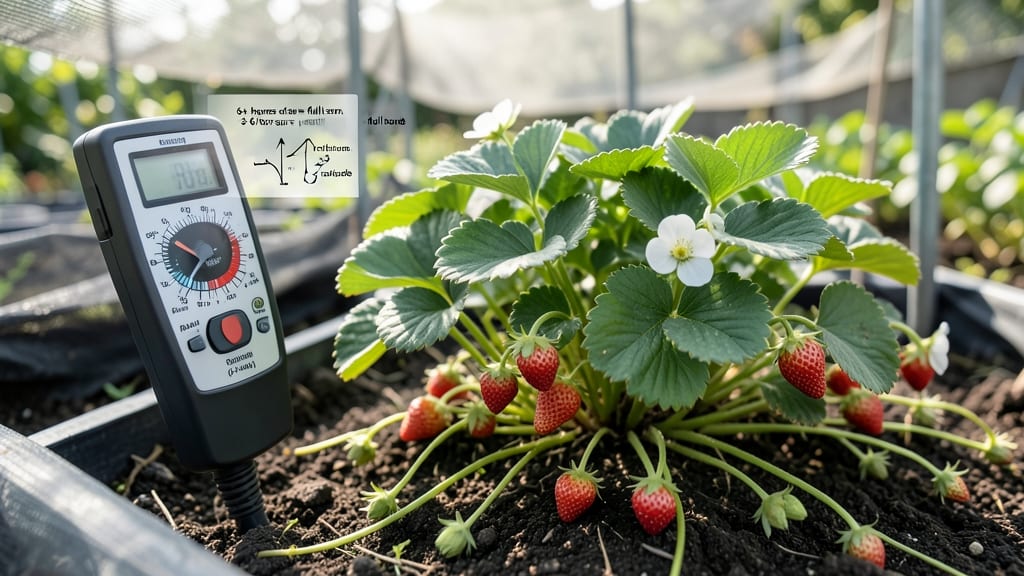
To grow thriving 🍓 strawberry plants, you need to get their light just right—because too little sun means tiny berries, while too much can scorch your harvest.
Most gardeners assume full sun is always best, but strawberries actually have specific light needs that change as they grow, and skipping these details could leave you with weak plants.
In general, strawberries crave 6 to 10 hours of direct sunlight daily, especially during their fruiting stage, when they’re working hard to produce those sweet, juicy berries. Without enough light, your plants might send up long, leggy stems or produce small, bland-tasting fruit.
But here’s the catch: some varieties, like everbearing types, can tolerate a little afternoon shade, while others need that golden morning sun to thrive.
If you’re growing strawberries in containers or shaded spots, don’t worry—there are ways to compensate. I’ll show you how to spot signs of light stress, adjust your setup for partial shade, and even maximize growth in tricky conditions like urban balconies or hot climates.
Let’s make sure your strawberries get exactly what they need to flourish.
The key isn’t just throwing them in the sunniest spot you have—it’s understanding how light affects every stage of their life cycle, from tiny seedlings to heavy fruit-bearing plants. Trust me, once you dial this in, you’ll be harvesting plump, flavorful strawberries all season long.

Optimal sunlight requirements for strawberry plants by variety and growth stage
Strawberries thrive in full sun, but their exact light needs vary by variety and growth stage. Most varieties need at least 6-10 hours of direct sunlight daily, though some tolerate partial shade in hot climates. Understanding these nuances ensures your plants produce abundant, flavorful berries.
Let’s break down the light requirements for the three main strawberry types: June-bearing, everbearing, and day-neutral. Each has unique needs during seedling, flowering, and fruiting stages. For example, June-bearing varieties demand the most sun, while day-neutral types adapt better to partial shade.
Here’s a quick reference for their sunlight needs:
| Variety | Seedling Stage | Flowering Stage | Fruiting Stage | Shade Tolerance |
|---|---|---|---|---|
| June-bearing | 6+ hours | 8-10 hours | 10+ hours (critical) | Low (avoid shade) |
| Everbearing | 6+ hours | 6-8 hours | 8+ hours | Moderate (partial shade OK) |
| Day-neutral | 4-6 hours | 6+ hours | 6-8 hours | High (adapts well) |
During the seedling stage, young strawberry plants need 4-6 hours of sunlight to establish strong roots. Once they begin flowering, increase exposure to 8+ hours to encourage robust blooms. The fruiting stage is the most critical—June-bearing varieties, in particular, require 10+ hours of sunlight to develop sweet, high-quality berries.
If you’re growing strawberries in containers or urban gardens, prioritize south-facing windows or balconies. In hot climates, provide afternoon shade to prevent leaf scorch, especially for June-bearing types. Use shade cloth (30-50%) if temperatures exceed 90°F (32°C).
Seasonal light changes also impact strawberries. In winter, reduced daylight can slow growth, but everbearing and day-neutral varieties still produce fruit with 6+ hours of light. Supplement with grow lights if indoors or in high-latitude regions.
For organic gardeners, mulch with straw or leaves to retain soil moisture and regulate temperature, which indirectly supports light absorption. Avoid dense mulch layers that block sunlight from reaching the crown.
Pro tip: Monitor your strawberries’ leaf color. Deep green leaves indicate optimal light, while pale or yellowing leaves signal insufficient sun. Adjust placement as needed to maintain vibrant foliage and maximize yields.
Signs your strawberry plants aren’t getting enough (or too much) sunlight
Strawberries are sun-worshippers, and when they don’t get enough light, they’ll send you clear distress signals. One of the first signs is pale, yellowing leaves, especially on the lower stems.
This happens when plants stretch toward light, a condition called etiolation, which weakens stems and reduces fruiting potential.
If your strawberries are producing tiny, hard berries or none at all, that’s another red flag. Insufficient sunlight delays flowering and weakens fruit development. In extreme cases, you might see long, leggy stems with few leaves—this is your plant begging for more sun.
On the flip side, too much direct sun can cause leaf scorch, visible as crispy, brown edges on leaves. Over time, this stress leads to poor fruit quality, with berries becoming small, misshapen, or overly tart.
If you notice white or yellow patches on leaves, it’s a sign of sunburn.
🌱
Warning: Common Light Mistakes
- Placing plants under trees – Dappled shade reduces fruit quality
- Ignoring afternoon sun – Intensity matters more than total hours
- Using black containers – Absorbs heat, burning roots in hot climates
Container-grown strawberries are especially vulnerable to light issues. If your potted plants are leaning toward one side, they’re reaching for light. Check the direction of your windows—south-facing gets the most consistent light, while north-facing may leave plants starving.
Even 6-8 hours of sun can be insufficient if it’s all in the harsh afternoon.
For shade-tolerant varieties like Alpine strawberries, you might see smaller but viable fruit, but most commercial varieties will struggle below 6 hours. If your garden has partial shade, prioritize morning sun—it’s less intense than afternoon rays and still promotes healthy growth.
🌿
To fix light issues, rotate containers weekly so all sides get even exposure. If your garden is too shady, consider reflective surfaces like white walls or mirrors to bounce extra light onto plants.
And remember: even healthy-looking plants may need more light if they’re not fruiting—don’t assume they’re thriving just because the leaves look good!